gut health
Carnivore vs Ketovore: How to Choose the Path That Fits You
Carnivore vs Ketovore: How to Choose the Path That Fits You
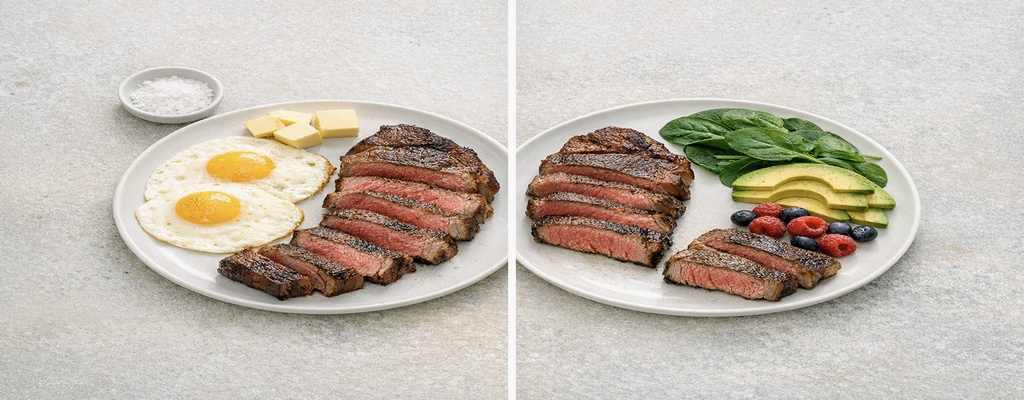
If you’ve spent any time in the low‑carb world, you’ve probably noticed something: people love to argue about Carnivore and Ketovore. One group says you should eat only meat. Another says you should eat mostly meat. Someone else insists you need a handful of berries “for antioxidants.” And then there’s the person who swears they feel amazing on Carnivore… except on weekends… unless it’s a holiday… or a birthday.
It’s no wonder people feel confused.
But here’s the truth most people never say out loud:
You don’t need someone else’s rules — you need a path that fits YOU.
Carnivore and Ketovore are not enemies. They’re not rivals. They’re not competing diets. They’re simply two different ways of eating that can serve you in different seasons of your life. And once you understand how each one works, choosing between them becomes surprisingly simple.
Let’s break it down — not with complicated charts or strict rules — but with real‑life clarity.

Carnivore: The “Just Eat Meat” Reset
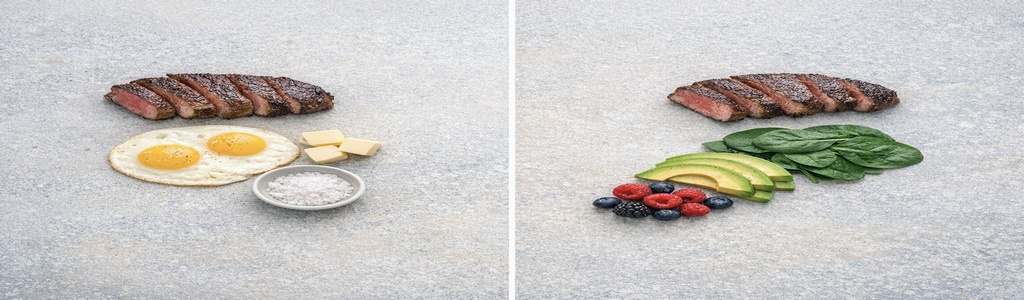
Carnivore is the simplest way of eating you’ll ever try. It’s meat, eggs, seafood, animal fats, salt, and water. That’s it. No tracking. No macros. No plants. No guessing. It’s the nutritional equivalent of clearing your desk, wiping the slate clean, and starting fresh.
People don’t choose Carnivore because it’s trendy. They choose it because it removes the noise. It takes away the cravings, the constant decision‑making, the “should I eat this?” mental chatter. It gives you a clean reset — physically and mentally.
But Carnivore isn’t just about food. It’s about clarity. It’s about learning what your body actually likes without the interference of carbs, sugar, or plant foods that may or may not agree with you.
Of course, Carnivore has its challenges. Social events can feel awkward. Eating out takes planning. And the mental shift of removing all plant foods can feel bigger than the physical shift. But for many people, the simplicity is worth it. It’s a season of focus — a season of learning — a season of getting back in control.
Ketovore: The “Mostly Meat” Lifestyle
If Carnivore is the clean slate, Ketovore is the comfortable middle ground. It’s still animal‑based, still low‑carb, still simple — but with a little more flexibility. You can include low‑carb vegetables, berries, avocado, seasonings, and the occasional keto‑friendly food without losing the structure that keeps you on track.
Ketovore feels easier for many people because it fits real life. You can go to a family dinner without feeling like an alien. You can enjoy a small side of vegetables without guilt. You can live in a way that feels sustainable long‑term.
But flexibility comes with responsibility. Ketovore requires honesty. It requires awareness. It requires you to know the difference between “a little flexibility” and “I’m sliding back into old habits.” When done well, Ketovore is a powerful, balanced lifestyle. When done carelessly, it becomes keto‑ish — and that’s where people get stuck.
So Which One Is Better?
That’s the wrong question — and it’s why so many people stay confused.
The real question is:
Which one fits your life, your personality, and your goals right now?
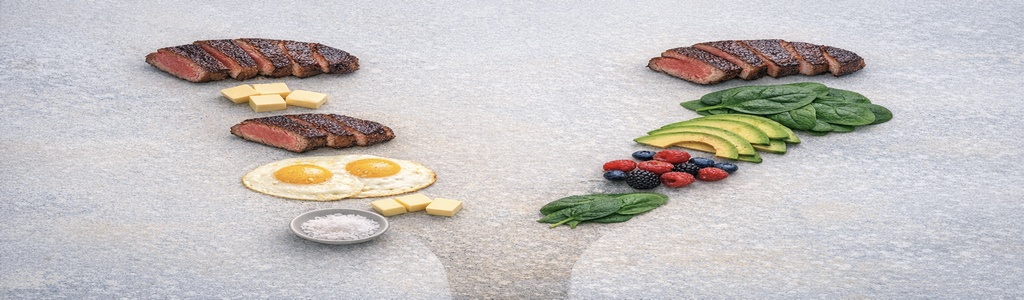
Carnivore is perfect if you want simplicity, structure, and a clean reset.
Ketovore is perfect if you want flexibility, variety, and long‑term balance.
Neither is superior. They’re simply different tools.
Think of it like this:
- Carnivore is the “declutter your entire house” moment.
- Ketovore is the “keep your house clean without going extreme” rhythm.
Both matter. Both help. Both work.
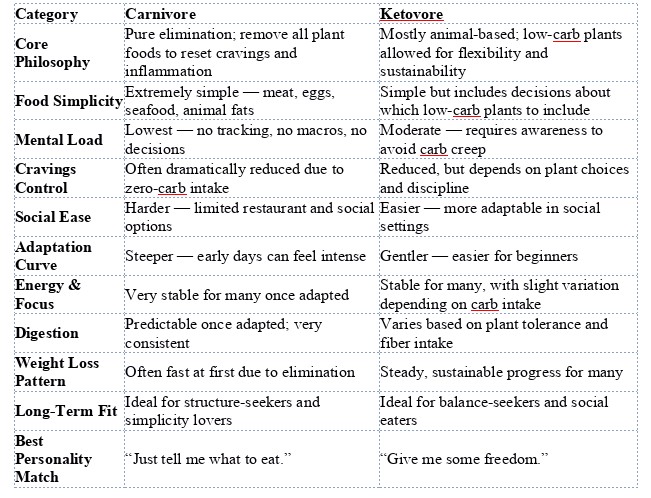
Carnivore vs Ketovore: A Real‑Life Comparison
How to Know Which One Fits You
Here’s the simplest way to decide:
If you’re overwhelmed, stressed, craving everything, or stuck in a cycle of starting and stopping — Carnivore gives you the reset you need.
If you’re stable, confident, and want a lifestyle you can live with long‑term — Ketovore gives you the flexibility you want.
And here’s the part most people never tell you:
You can switch between them anytime.
You’re not locked in. You’re not failing if you adjust. You’re simply learning what works for you — and that’s the whole point.

Real‑Life Examples
Take the Overthinker. They start Ketovore because it feels easier… but the constant decisions wear them down. They switch to Carnivore and suddenly feel free.
Then there’s the Social Eater. They start Carnivore and feel amazing — until they feel isolated. They shift to Ketovore and find a balance that lets them enjoy life without losing progress.
And the Beginner? They start Ketovore, build confidence, then transition to Carnivore when they’re ready for a deeper reset.
Different people. Different needs. Different seasons.
My Experience‑Based Recommendation
**NOTE** This is NOT medical advice. Always seek the guidance from your physician before beginning any type of exerciseprogram or a change in diet.
Start Ketovore if you want flexibility.
Start Carnivore if you want clarity.
Move between them as needed.
Use each one as a tool, not a prison.
You’re not choosing a diet.
You’re choosing a direction.
Carnivore is a way of eating (WOE)
Carnivore is NOT a diet perse, if you want to refer to it as a diet. It will be the elimination diet.
Final Takeaway
Carnivore and Ketovore aren’t about perfection. They’re about progress. They’re about learning your body. They’re about finding a way of eating that gives you energy, confidence, and control.
You don’t have to choose forever.
You just have to choose what works for you right now — and give yourself permission to grow.

Exploring the Carnivore Diet: Basics, Benefits, and What You Need to Know
Understanding the Basics and Benefits of the Carnivore Diet:
In a world where every diet seems to promote more restrictions and complicated meal plans, what if you could thrive on a diet that consists of just one food group? The carnivore diet has been gaining traction among those looking for simplicity in their eating habits, weight loss, and relief from certain health conditions. But is it truly as straightforward and beneficial as it sounds?
While many diets focus on increasing fruits, vegetables, and whole grains, the carnivore diet goes against the grain—quite literally. By eliminating all plant-based foods, it offers a stark contrast to mainstream nutrition advice. But for those who have tried various approaches with little success, the simplicity of focusing solely on animal-based foods can be incredibly appealing.
In this post, we’ll break down the basics, potential benefits, and practical tips for success to help you decide if the carnivore diet could be a game-changer for your health.
Basics of the Carnivore Diet
- Food Categories Allowed:
- Meat: Beef, pork, chicken, lamb, and other meats are the foundation of the carnivore diet. Red meat, in particular, is favored due to its high protein and fat content, but other options like poultry and game meats are also included.
- Fish: Fatty fish such as salmon, mackerel, and sardines are encouraged for their omega-3 fatty acids, which are essential for heart and brain health. White fish, while lower in fat, is also permissible.
- Eggs: Eggs are a popular choice for those following the carnivore diet because they are a complete protein, meaning they contain all nine essential amino acids.
- Dairy: Depending on individual tolerance, some may include cheese, butter, and heavy cream. Dairy products like yogurt and milk are generally avoided due to their higher carbohydrate content, but this varies by person.
- Animal Fats: Animal-derived fats like lard, tallow, and bone marrow are staples for many carnivore diet followers, providing a dense source of energy and healthy fats.
- Forbidden Foods:
- Vegetables: Even low-carb vegetables like spinach, broccoli, and kale are off-limits. This might seem counterintuitive given their health benefits, but proponents of the carnivore diet believe that plant foods can contribute to inflammation and digestive issues for some individuals.
- Fruits: All fruits, including berries, bananas, and apples, are excluded because of their sugar content. Even low-sugar fruits are avoided to maintain a strict focus on animal-based foods.
- Grains and Legumes: Grains like wheat, rice, oats, and legumes such as beans and lentils are completely eliminated due to their carbohydrate content and the presence of anti-nutrients like phytic acid and lectins.
- Sugars and Sweets: All forms of sugar, including honey, agave syrup, and artificial sweeteners, are avoided. This is to keep insulin levels stable and to reduce cravings for non-carnivore foods.
- Meal Structure:
- Most meals consist of protein-rich foods such as steak, burgers, or seafood. The simplicity of the meal structure is one of the key attractions for people seeking to minimize meal prep and decision-making fatigue. With fewer ingredients to manage, the diet becomes less complicated.
- There’s typically no specific rule for meal timing or calorie counting. Instead, followers of the carnivore diet eat based on hunger cues, allowing their bodies to dictate when and how much to eat. This approach emphasizes intuitive eating over strict portion control.
- Hydration:
- Water is the primary beverage, and it is recommended to drink plenty of it throughout the day. Some carnivore dieters also include coffee or tea (without sugar or milk), but purists may only consume water. Electrolyte balance can be a concern for those new to the diet, so some supplement with sodium, magnesium, or potassium during the transition phase.

- Water is the primary beverage, and it is recommended to drink plenty of it throughout the day. Some carnivore dieters also include coffee or tea (without sugar or milk), but purists may only consume water. Electrolyte balance can be a concern for those new to the diet, so some supplement with sodium, magnesium, or potassium during the transition phase.
Benefits of the Carnivore Diet
- Weight Loss: Many people report significant weight loss on the carnivore diet. A high-protein intake and elimination of carbs can help with satiety, reduce caloric intake, and lead to effective fat loss. The absence of carbohydrates also stabilizes blood sugar levels, which can prevent cravings and overeating. In fact, some studies suggest that low-carb, high-protein diets support faster fat burning and may even enhance metabolic rate.
- Simplicity: The diet is very simple in structure and limits food choices, which makes meal planning easy. For those who struggle with decision fatigue from meal prep, the carnivore diet offers a straightforward way to eat. There’s no need to measure portions, count macros, or track calories—just focus on eating animal-based foods when hungry.
- Reduced Inflammation: By removing plant-based foods that may contain anti-nutrients (like lectins and oxalates), some followers claim they experience less inflammation and improvement in autoimmune conditions. These anti-nutrients, found in grains and legumes, are thought to interfere with nutrient absorption and may contribute to inflammation in sensitive individuals. While anecdotal evidence supports these claims, more research is needed to confirm the long-term effects of eliminating plant foods on inflammation.
- Improved Mental Clarity: Many people report better focus and mental clarity on the carnivore diet, likely due to the stabilization of blood sugar levels and improved fat metabolism. Studies on ketogenic diets (which share some similarities with the carnivore diet) also show improvements in cognitive function, especially in individuals prone to energy dips and brain fog caused by fluctuating blood sugar levels.
- Digestive Relief: For those with digestive issues or food sensitivities, eliminating fibrous foods may reduce bloating, constipation, or diarrhea. This can be particularly beneficial for individuals suffering from IBS (irritable bowel syndrome) or other gut-related issues. Some carnivore diet followers report that their digestive health improves dramatically when they remove fiber and plant-based foods, although this runs counter to traditional dietary advice that promotes fiber for digestive health.
- Muscle Growth: A high-protein, high-fat diet supports muscle maintenance and growth, especially when combined with strength training. Animal proteins contain all the essential amino acids needed for muscle repair and growth, making the carnivore diet suitable for those aiming to preserve or build lean muscle mass.
Tips for Success on the Carnivore Diet
Transitioning to the carnivore diet can be a challenge, but here are some practical tips to make the switch smoother:
- Start Slowly: Instead of diving straight in, try gradually increasing your intake of animal-based foods while reducing carbohydrates. This can help prevent issues like the “keto flu” or digestive discomfort, which are common when switching to a low-carb, high-fat diet.
- Stay Hydrated: Water is crucial, especially since you won’t be getting fluids from fruits and vegetables. Some people also benefit from adding electrolytes, particularly during the transition phase. Electrolyte imbalances can cause headaches, muscle cramps, and fatigue, so it’s important to replenish minerals like sodium, potassium, and magnesium.
- Choose Quality Meats: Opt for grass-fed, organic meats where possible. These meats are richer in omega-3 fatty acids and other nutrients, making your diet more nutritionally balanced. In addition, grass-fed beef tends to be lower in inflammatory omega-6 fats, which can help reduce overall inflammation.
- Listen to Your Body: Pay attention to hunger signals and avoid overeating. Since carnivore meals can be calorie-dense, it’s easy to overconsume without realizing it. However, the diet encourages intuitive eating—so if you’re hungry, eat, and if you’re full, stop.
- Monitor Nutrient Intake: You may want to consider periodic blood tests to ensure you’re not deficient in essential nutrients like vitamins D and B12, or omega-3 fatty acids. While the carnivore diet can provide many of these nutrients in abundance, some individuals may require supplementation, particularly if they avoid dairy.
Consider This
If you’re looking for a straightforward way to manage your diet and potentially improve your health, the carnivore diet offers a unique approach. But as with any dietary change, it’s essential to weigh the pros and cons. The simplicity and potential health benefits appeal to many, but it’s important to consider the lack of variety and possible nutrient deficiencies over time.
Before diving into the carnivore lifestyle, consider experimenting with small changes, such as incorporating more animal-based foods into your diet. And as always, consult with a healthcare professional to ensure it’s the right fit for you.
By doing your research, listening to your body, and approaching the diet with an open mind, you can determine whether the carnivore diet aligns with your health goals and lifestyle.

My Personal Experience:
GO SLOW!! I went cold turkey and my body reacted accordingly. I made frequent trips to the bathroom and some I didn’t go I should have! I think it took longer for my body to adjust because of the abrupt change. Slow and steady wins the race! And this is NOT a diet , this is a WOE (Way Of Eating), it’s a complete change from what we’ve heard, taught and know. So take out one kind of food, for example: potatoes, so remove those from your diet and add another serving of some kind of meat. Now do this for a week or two and then remove another food and add more meat in it’s place. And soon you’ll be eating nothing but meat!! Go For It, You can do it! If you can’t afford the fancy meat, get the cheap stuff!! It is far better in every way than a bag of chips!