ancestral eating
Carnivore vs Ketovore: How to Choose the Path That Fits You
Carnivore vs Ketovore: How to Choose the Path That Fits You
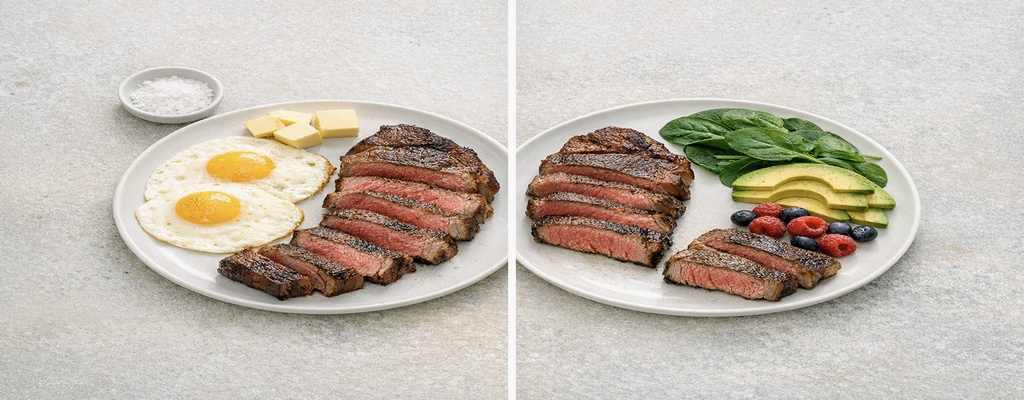
If you’ve spent any time in the low‑carb world, you’ve probably noticed something: people love to argue about Carnivore and Ketovore. One group says you should eat only meat. Another says you should eat mostly meat. Someone else insists you need a handful of berries “for antioxidants.” And then there’s the person who swears they feel amazing on Carnivore… except on weekends… unless it’s a holiday… or a birthday.
It’s no wonder people feel confused.
But here’s the truth most people never say out loud:
You don’t need someone else’s rules — you need a path that fits YOU.
Carnivore and Ketovore are not enemies. They’re not rivals. They’re not competing diets. They’re simply two different ways of eating that can serve you in different seasons of your life. And once you understand how each one works, choosing between them becomes surprisingly simple.
Let’s break it down — not with complicated charts or strict rules — but with real‑life clarity.

Carnivore: The “Just Eat Meat” Reset
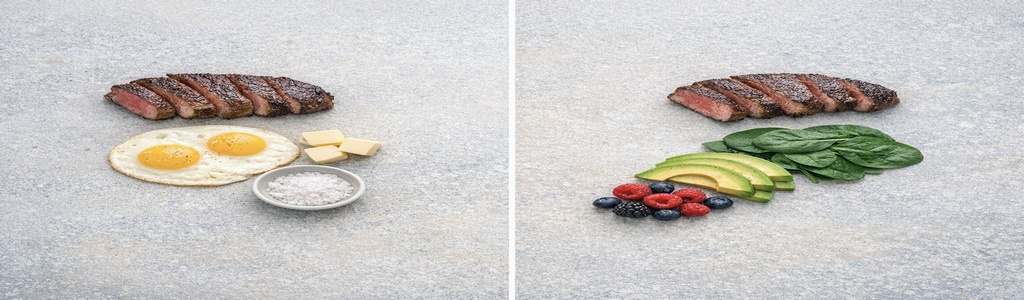
Carnivore is the simplest way of eating you’ll ever try. It’s meat, eggs, seafood, animal fats, salt, and water. That’s it. No tracking. No macros. No plants. No guessing. It’s the nutritional equivalent of clearing your desk, wiping the slate clean, and starting fresh.
People don’t choose Carnivore because it’s trendy. They choose it because it removes the noise. It takes away the cravings, the constant decision‑making, the “should I eat this?” mental chatter. It gives you a clean reset — physically and mentally.
But Carnivore isn’t just about food. It’s about clarity. It’s about learning what your body actually likes without the interference of carbs, sugar, or plant foods that may or may not agree with you.
Of course, Carnivore has its challenges. Social events can feel awkward. Eating out takes planning. And the mental shift of removing all plant foods can feel bigger than the physical shift. But for many people, the simplicity is worth it. It’s a season of focus — a season of learning — a season of getting back in control.
Ketovore: The “Mostly Meat” Lifestyle
If Carnivore is the clean slate, Ketovore is the comfortable middle ground. It’s still animal‑based, still low‑carb, still simple — but with a little more flexibility. You can include low‑carb vegetables, berries, avocado, seasonings, and the occasional keto‑friendly food without losing the structure that keeps you on track.
Ketovore feels easier for many people because it fits real life. You can go to a family dinner without feeling like an alien. You can enjoy a small side of vegetables without guilt. You can live in a way that feels sustainable long‑term.
But flexibility comes with responsibility. Ketovore requires honesty. It requires awareness. It requires you to know the difference between “a little flexibility” and “I’m sliding back into old habits.” When done well, Ketovore is a powerful, balanced lifestyle. When done carelessly, it becomes keto‑ish — and that’s where people get stuck.
So Which One Is Better?
That’s the wrong question — and it’s why so many people stay confused.
The real question is:
Which one fits your life, your personality, and your goals right now?
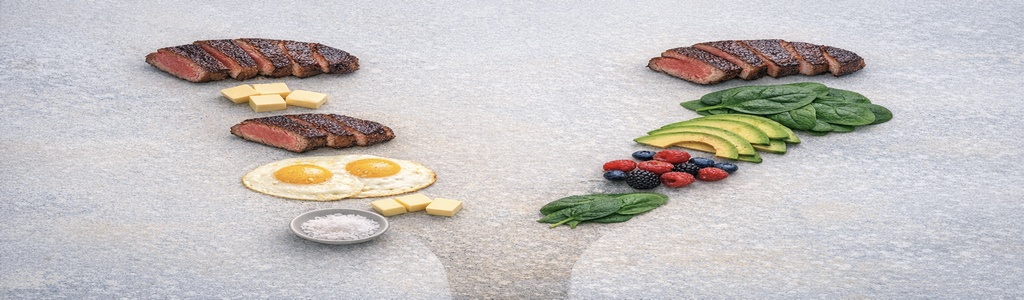
Carnivore is perfect if you want simplicity, structure, and a clean reset.
Ketovore is perfect if you want flexibility, variety, and long‑term balance.
Neither is superior. They’re simply different tools.
Think of it like this:
- Carnivore is the “declutter your entire house” moment.
- Ketovore is the “keep your house clean without going extreme” rhythm.
Both matter. Both help. Both work.
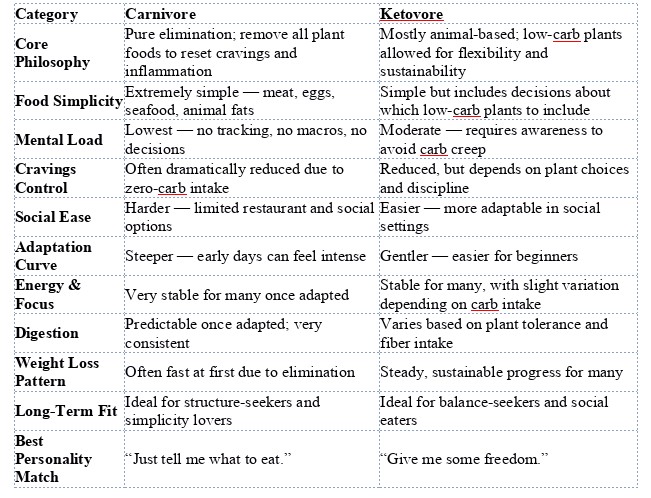
Carnivore vs Ketovore: A Real‑Life Comparison
How to Know Which One Fits You
Here’s the simplest way to decide:
If you’re overwhelmed, stressed, craving everything, or stuck in a cycle of starting and stopping — Carnivore gives you the reset you need.
If you’re stable, confident, and want a lifestyle you can live with long‑term — Ketovore gives you the flexibility you want.
And here’s the part most people never tell you:
You can switch between them anytime.
You’re not locked in. You’re not failing if you adjust. You’re simply learning what works for you — and that’s the whole point.

Real‑Life Examples
Take the Overthinker. They start Ketovore because it feels easier… but the constant decisions wear them down. They switch to Carnivore and suddenly feel free.
Then there’s the Social Eater. They start Carnivore and feel amazing — until they feel isolated. They shift to Ketovore and find a balance that lets them enjoy life without losing progress.
And the Beginner? They start Ketovore, build confidence, then transition to Carnivore when they’re ready for a deeper reset.
Different people. Different needs. Different seasons.
My Experience‑Based Recommendation
**NOTE** This is NOT medical advice. Always seek the guidance from your physician before beginning any type of exerciseprogram or a change in diet.
Start Ketovore if you want flexibility.
Start Carnivore if you want clarity.
Move between them as needed.
Use each one as a tool, not a prison.
You’re not choosing a diet.
You’re choosing a direction.
Carnivore is a way of eating (WOE)
Carnivore is NOT a diet perse, if you want to refer to it as a diet. It will be the elimination diet.
Final Takeaway
Carnivore and Ketovore aren’t about perfection. They’re about progress. They’re about learning your body. They’re about finding a way of eating that gives you energy, confidence, and control.
You don’t have to choose forever.
You just have to choose what works for you right now — and give yourself permission to grow.

Organ Meats for Carnivore Beginners: A Gentle Introduction
Organ Meats for Carnivore Beginners: A Gentle Introduction
Organ meats are the unsung heroes of the carnivore diet. Packed with nutrients, affordable, and surprisingly versatile, they offer a powerful way to deepen your commitment to ancestral eating. But for many newcomers, they’re also intimidating. This guide is here to change that — with practical tips, emotional encouragement, and a clear path forward.
Why Organ Meats Matter
- Nutrient Density: Liver, heart, kidney, and spleen are loaded with vitamins A, B12, iron, zinc, and CoQ10.
- Affordability: Compared to ribeyes and tenderloins, organ meats are budget-friendly and often available in bulk.
- Sustainability: Eating nose-to-tail honors the whole animal and reduces waste.
- Hormonal Support: Many organ meats contain compounds that support thyroid, adrenal, and reproductive health.
“Eat the whole animal. Nature doesn’t waste—and neither should you.”

Start Here: Easiest Cuts for Beginners
If you’re new to organ meats, start with cuts that are mild in flavor and easy to prepare:
| Cut | Flavor Profile | Prep Tip |
| Beef Liver | Rich, slightly metallic | Pan-fry with salt and butter |
| Heart | Meaty, lean | Slice thin and grill or sauté |
| Tongue | Tender, beefy | Slow cook, peel, and slice |
| Spleen | Earthy, dense | Mix into ground beef |
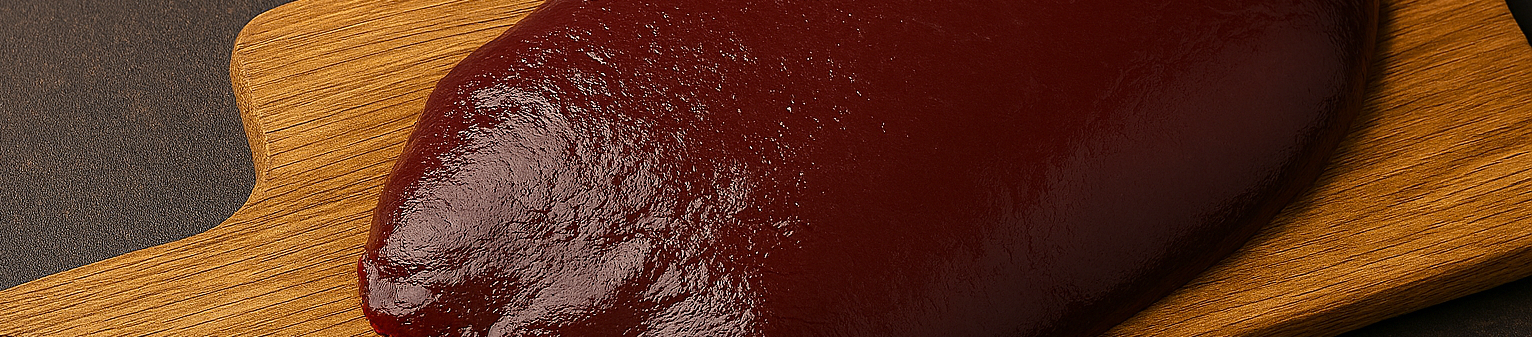
Pro Tip: Mix small portions of liver or spleen into ground beef patties to ease into the taste.
️ How to Cook Organ Meats Without Fear
- Keep it simple: Salt, butter, and cast iron go a long way.
- Don’t overcook: Especially liver — it gets chalky fast.
- Use broth or fat: Helps mellow stronger flavors.
- Try slow cooking: Tongue and kidney shine when braised.
Storage Tips
Organ meats are best enjoyed fresh, but with a little planning, you can keep them on hand without waste or stress.
- Freeze in 4–6 oz portions for easy rotation and meal prep.
- Vacuum seal or use airtight containers to preserve freshness and prevent freezer burn.
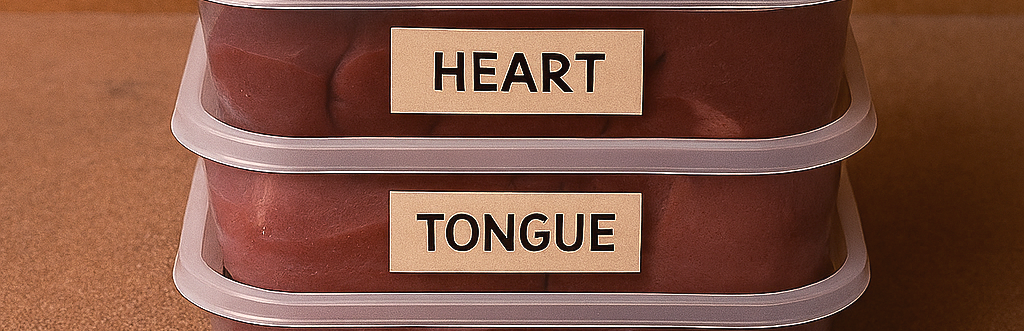
- Label clearly — some cuts look alike once frozen, especially liver and spleen.
- Store separately from muscle meats to avoid cross-contamination and flavor transfer.
- Use within 3 months for optimal taste and nutrient retention.
Tip: If you’re buying in bulk, consider organizing your freezer by cut type — liver, heart, tongue — so you can rotate weekly and avoid burnout.
Consider This
Organ meats aren’t just for hardcore carnivores — they’re for anyone ready to level up their health. Start small, stay consistent, and remember: every bite is a vote for vitality. These cuts may challenge your palate, but they’ll reward your body in ways no supplement ever could.
You’re not just eating differently — you’re reclaiming ancestral wisdom.
You’re not just nourishing your body — you’re honoring the whole animal.
You’re not just surviving — you’re building a foundation for long-term strength.
“Respect the animal. Honor the nourishment. Reclaim your strength.”