Meat-Based Nutrition
Carnivore Drain: Why You Feel Worn Out at First (And Why It Gets Better)
Carnivore Drain: Why You Feel Worn Out at First (And Why It Gets Better)
August 24, 2026

Why the First Days Feel So Heavy
The beginning of your carnivore journey often feels nothing like you expected. You come in ready for sharper focus, cleaner energy, and the steady strength people rave about — but instead you wake up sluggish, foggy, and strangely weighed down. It’s confusing when a diet built on nutrient‑dense foods leaves you feeling like your battery is running low. But this early “drain” isn’t a sign that carnivore is failing you. It’s a sign that your body is shifting gears in a way it hasn’t had to in years.
Many people also experience subtle electrolyte changes during this phase, which can amplify the feeling of low energy. If you haven’t explored this yet, you may find Electrolytes on Carnivore: Fixing Fatigue, Cramps, and Low Energy the Right Way helpful — it explains why minerals matter so much during the transition:

What’s Really Happening Inside Your Body
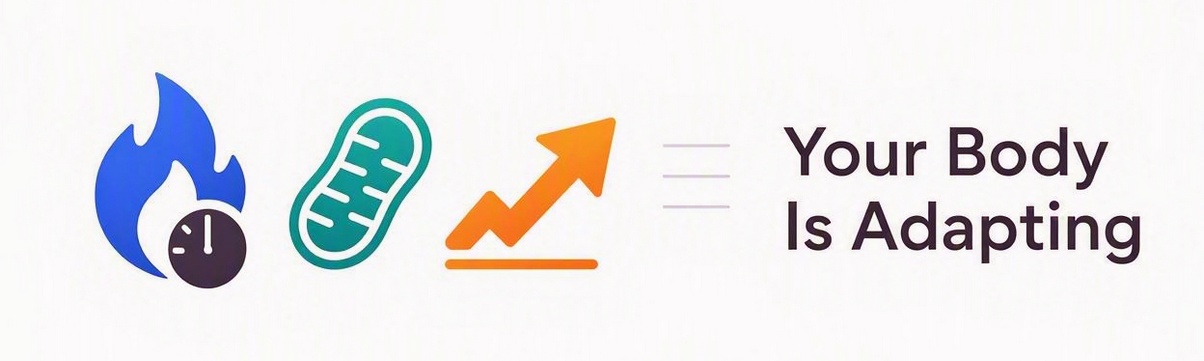
When you cut carbs, your body begins a metabolic shift that happens in stages. First, your glycogen stores begin to drop. Glycogen is your body’s quick‑access fuel, and once it’s depleted, your system has to adjust. Then your insulin levels fall, which signals your body to begin tapping into stored fat. Your cells start increasing fat‑oxidation pathways, and your mitochondria — the tiny engines inside your cells — begin adapting to ketones as their new fuel source.
This shift is often described as a “gear change,” and like any gear change, it can feel rough. Your body isn’t failing. It’s recalibrating. And recalibration can feel like heaviness, slower mornings, foggy thinking, low motivation, and inconsistent energy. These sensations are temporary. They’re the signs of a system learning to run cleaner.
Digestion also changes during this period, which can contribute to the early sense of heaviness or sluggishness. If you’re noticing digestive shifts, Carnivore Digestion: What Actually Changes breaks down what’s normal and what to expect.

What Carnivore Experts Have Seen Again and Again
People who’ve lived carnivore for years consistently report the same pattern: the drain comes first, then the lift. Dr. Ken Berry calls it “the metabolic lag,” the period where your body is adjusting but hasn’t yet reached full fat‑adaptation. Dr. Anthony Chaffee describes it as “the adaptation dip,” a temporary slowdown before your metabolism catches up. Long‑term carnivore veterans simply call it “the shift.”
Across thousands of stories, one truth stands out: The people who push through the drain experience the biggest transformation.
Once your body finishes the shift, your energy becomes more stable than anything you’ve experienced on a carb‑based diet. You stop having afternoon crashes. Your brain feels clearer. Your mood steadies. Your hunger becomes predictable. Your sleep improves. Your workouts feel smoother. Your day stops being controlled by blood sugar swings.
The drain is not a warning. It’s a doorway.
Why You Feel Worn Out — And Why It’s Temporary
If you’re feeling worn out right now, it doesn’t mean carnivore isn’t working. It means it is. Your body is doing the hard work of switching fuel systems. It’s letting go of the quick‑burn energy of glucose and learning to rely on the slow, steady burn of fat. This shift requires hormonal adjustments, digestive simplification, neurological recalibration, and metabolic restructuring.
Hydration needs also change dramatically when carbs disappear, and dehydration can make the early drain feel even heavier. If you want to understand this part of the transition better, Why Your Water Needs Change When You Cut Carbs explains why carnivore alters your fluid balance and how to stay ahead of it.
Your hormones begin stabilizing as insulin drops. Your digestion becomes simpler as plant fibers disappear. Your brain adjusts to ketones, which provide a more stable fuel than glucose. Your mitochondria become more efficient. Your inflammation begins to decrease. Your cravings start to fade. Your energy becomes less dependent on meal timing.
This is the part most people quit — not because carnivore doesn’t work, but because they don’t realize the drain is temporary. If you stay consistent, the drain gives way to the lift. And when the lift comes, it’s unmistakable.
What This Means for Your Journey
The early days of carnivore are not a test of willpower. They’re a test of understanding. If you know what’s happening inside your body, the drain becomes less frightening and more meaningful. Gradually, the perspective shifts to see it as progress rather than a setback. You stop worrying that you’re doing something wrong. You stop comparing your early days to someone else’s long‑term results. You stop doubting the process.
Carnivore is not a diet that gives instant gratification. It’s a diet that gives lasting transformation. The drain is simply the price of admission. And once you’re through it, you’ll understand why so many people say carnivore gave them the best energy of their lives.
Consider This
If you feel drained right now, ask yourself: Is this fatigue… or is this transformation in progress?
Sometimes the tiredness you feel is your body clearing the path for a better version of you. This is a process, slow and steady wins the race!! This process is different for everyone, because each of us is unique. Our bodies are similar but we are individuals, our bodies have been conditioned differently through the years, so it may take longer than some or that transition may be quicker.
Don’t worry, take it one day at a time.
Cravings, Meet Carnivore
Cravings, Meet Carnivore: How to Stay Strong When Temptation Strikes
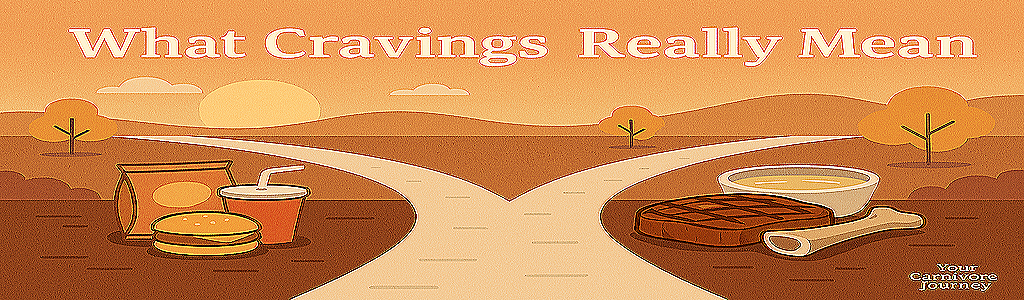
You’re two weeks in. Your energy’s climbing, your jeans fit better, and there’s momentum building. Then, out of nowhere, it hits—the scent of fresh-baked cinnamon rolls wafting out of a storefront, or a sudden mental image of your favorite childhood snack. Cravings like these are part of the carnivore transition, especially in those early weeks. But here’s the truth: they aren’t signals of failure—they’re signs of healing.
Cravings surface when your body and brain begin to unlearn old habits. Physically, you’re shifting away from dependence on carbohydrates and sugars. Emotionally, you’re detaching from comfort foods that once played leading roles in celebrations, stress relief, or daily routine. These cravings aren’t red flags—they’re just notifications. The body may be asking for more fat, more electrolytes, or even a moment of stillness and reflection.
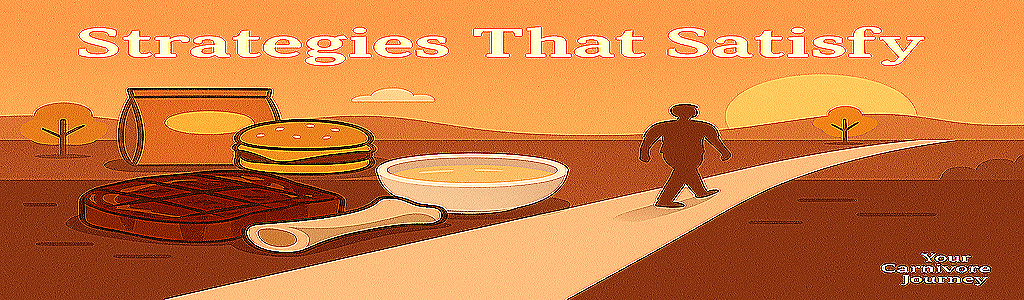
So how do you respond when temptation whispers? Start by feeding yourself well. Fat is your ally—it provides deep satiety and helps silence false hunger signals. Many carnivores find that cravings intensify if they under-eat protein or fat, especially during the adaptation phase. If you’re feeling off, don’t try to “beat” the craving—answer it with a steak. Seriously. This isn’t a game of restriction; it’s about restoration.
Sometimes cravings stem from emotion, not hunger. If you find yourself mindlessly scanning the pantry or dreaming of crunchy snacks, it might be time to get outside. Sunlight, movement, or even a short prayer can disrupt the craving loop and re-center your mind on your goals. And don’t underestimate the power of hydration—low electrolytes can imitate hunger. Sip on bone broth or salt your water if you’re feeling unusually snacky.
Dr. Shawn Baker once said, “Cravings don’t mean you’re failing. They mean you’re healing.” That perspective is powerful. The body protests not because you’re doing something wrong, but because you’re finally doing something right. Many long-time carnivores report that cravings vanish after 30 to 60 days. The path gets smoother—and you get stronger.
Still, it’s okay to use tools along the way. For crunchy urges, pork rinds or crispy bacon can fill the gap. Sweet cravings? If tolerated, unsweetened whipped cream or high-fat cheese in small quantities might help bridge the transition. And for those needing volume, consider making mini “meat muffins” with seasoned ground beef. These are satisfying, easy to prepare in batches, and perfect for staying nourished without breaking your stride.

Consider This
You’re not chasing perfection—you’re building consistency. Every time you navigate a craving without giving in, you grow tougher and more resolved. This lifestyle shift goes beyond what’s on your plate—it redefines how you handle stress, pleasure, and reward.
So when cravings creep in, meet them head-on. Pause. Eat. Pray. Move. You’re not just surviving—you’re healing, thriving, and rewriting your story one bite at a time.