Carnivore Diet
Why Your Water Needs Change When You Cut Carbs
August 10, 2026

Carnivore Hydration: How Much Water You Really Need
Why Carnivore Changes Your Hydration Needs
Hydration is one of the quiet foundations of the carnivore way of eating. People talk endlessly about fat ratios, electrolytes, adaptation symptoms, and digestion, but water — the simplest nutrient of all — often gets reduced to slogans like “drink more” or “stay hydrated.” Carnivore changes that conversation. When you remove carbohydrates, your body’s relationship with water shifts in ways most people don’t expect, and understanding that shift can transform your energy, clarity, and comfort on this way of eating.
How Thirst Signals Become Honest
One of the first things new carnivore eaters notice is how honest their thirst becomes. On a carbohydrate‑heavy diet, thirst signals are drowned out by blood sugar swings, processed foods, and constant snacking. But once you transition to meat‑based eating, your body becomes quieter and clearer. Thirst shows up when you need water. It fades when you’ve had enough. It becomes a trustworthy guide instead of a confusing background noise. Many carnivore veterans describe this as one of the most surprising benefits of the diet — hydration becomes intuitive again.
Carnivore doctors and long‑term practitioners often emphasize this point: the human body is remarkably good at signaling when it needs salt and water, but modern eating patterns have taught people to ignore those signals. When you stop overriding your body with sugary drinks, processed foods, and constant snacking, your natural hydration rhythm returns. You begin to trust thirst again. You begin to trust your body again.

Why Salt Matters More Than Water
Salt is the quiet hero of carnivore hydration. Without carbohydrates, your kidneys excrete sodium more rapidly. This is good — it reduces inflammation and stabilizes blood pressure — but it also means you must be intentional about replenishing it. Many carnivore physicians explain that most people on carnivore don’t need to drink excessive water — they need adequate sodium. Sodium helps your body hold onto the water it needs without overhydrating. It keeps your energy stable, supports nerve function, and prevents the headaches and cramps people often misinterpret as dehydration.
Carnivore hydration becomes even more interesting when you consider how your body’s water needs change. Carbohydrates bind water — roughly three to four grams of water for every gram of glycogen. When you remove carbs, your body releases that stored water. This is why people lose several pounds in the first week of carnivore. It’s not just fat loss. It’s water loss. And once that water is gone, your daily hydration needs naturally decrease.
Many long‑term carnivore eaters describe drinking far less water than they did on carbohydrate‑heavy diets. They aren’t dehydrated — their bodies simply no longer require constant replenishment. This shift can feel strange at first. You may notice periods where you’re less thirsty than expected. You may find that drinking too much water makes you feel bloated or fatigued. You may even experience mild headaches if you drink large amounts of water without salt — a common mistake during adaptation.

Overhydration: The Hidden Carnivore Mistake
Carnivore coaches often point out that over hydration without salt is one of the most common causes of carnivore flu symptoms. Headaches, fatigue, muscle cramps, and that “washed‑out” feeling many beginners experience often come from drinking too much water and not enough sodium. Once people correct their salt intake, these symptoms usually disappear quickly.

How Hydration Becomes Intuitive
Once you settle into the rhythm of carnivore hydration, the experience becomes surprisingly peaceful. You stop forcing water. You stop chasing symptoms. You stop worrying about hitting arbitrary hydration numbers. Instead, you begin to trust your body again. You drink when thirsty. You salt your food generously. You use bone broth when you need a gentle boost. You supplement magnesium if your sleep or muscle tension suggests you’re running low. Hydration becomes a conversation between you and your body rather than a checklist.
This trust is one of the most empowering parts of carnivore. When you stop micromanaging hydration and start responding to your body’s cues, you feel more grounded, more stable, and more confident. Your energy becomes smoother. Your digestion becomes calmer. Your sleep becomes deeper. And your day‑to‑day comfort improves in ways that are hard to describe until you experience them.
Carnivore hydration isn’t about drinking more. It’s about drinking smarter. It’s about respecting the way your body handles water without carbohydrates. It’s about supporting your physiology with salt instead of fighting it with overhydration. And it’s about embracing the simplicity that carnivore brings to every part of your life — including the water you drink.
Consider This
If hydration is one of the simplest parts of carnivore, why do we make it so complicated. What would your days feel like if you stopped forcing water and started listening to your body’s natural cues. Carnivore hydration isn’t a chore. It’s a return to instinct. And when you embrace that instinct, your body responds with clarity, balance, and strength.
Eating Out on Carnivore: The Ultimate Restaurant Survival Guide
Eating Out and Staying Carnivore: Your Real‑World Survival Guide
Eating carnivore at home is simple. Your kitchen is your territory — your cast‑iron pan knows exactly what to do, your fridge is stocked with ribeyes, and your routine is predictable. But the moment you step outside, the world becomes a maze of menus, marinades, sauces, and social expectations. Suddenly, the simplicity of meat‑salt‑water feels like it’s colliding with a culture built around bread baskets, sugary glazes, and “just try a bite” moments.
If you’ve ever felt that tension — the quiet worry that eating out might derail your progress — you’re not alone. Every carnivore eventually faces the same question: How do I stay on track when I’m not in control of the kitchen?
The truth is simple:
You can stay 100% carnivore anywhere — even at places you’d never expect.
You just need a strategy and a little confidence.
The Rule That Makes Eating Out Effortless
Everything becomes easier when you embrace one simple truth:

Every restaurant serves meat.
It doesn’t matter whether you’re at Texas Roadhouse, Outback Steakhouse, Chili’s, Cracker Barrel, Five Guys, Wendy’s, or even McDonald’s — there is always a protein option. Your job is to choose the meat, remove the extras, and ask for it prepared as cleanly as possible.
Once you internalize this, the stress disappears. You stop scanning menus for “carnivore‑friendly” items and start looking for what was always there: beef, chicken, pork, eggs, seafood. The protein is the anchor. Everything else is optional.
Steakhouses: The Carnivore Comfort Zone
If you ever feel unsure about where to eat, choose a steakhouse. They are, without question, the easiest place to stay carnivore.
At places like Texas Roadhouse, Logan’s Roadhouse, or Outback Steakhouse, you can order a ribeye cooked in butter with nothing but salt. Even if the menu is filled with elaborate dishes, you can always request your steak without seasoning blends, without marinades, and without sides.
Most servers hear this request every day. A simple, confident line — “Just salt, please, no seasoning blends or marinades” — is all it takes. You’ll walk away with a clean, satisfying meal that keeps you firmly on track.
BBQ Restaurants: Amazing… With One Warning
BBQ restaurants can be carnivore heaven or carnivore disaster depending on one thing: sugar.
At places like Mission BBQ, Sonny’s BBQ, or local smokehouses, the meat itself — brisket, pulled pork, ribs, smoked chicken — is usually fantastic when ordered plain. But sauces, glazes, and even dry rubs often contain hidden sweeteners.
Ask for your meat without sauce and without sugary rubs. Most pitmasters respect a simple request, and you’ll end up with a plate of smoky, tender protein that fits perfectly into your carnivore lifestyle.
Burger Joints: The Ultimate Travel Hack
When you’re on the road, nothing beats a burger place. Burgers are universally available, easy to customize, and surprisingly carnivore‑friendly.
At Five Guys, you can order a “no‑bun, no‑veggies, all‑meat” bowl with multiple patties, cheese, and bacon. They’ll even pack it in a tin tray that feels like it was designed for carnivores.
At Wendy’s, a “Dave’s Triple, no bun, no sauce” becomes a perfect carnivore meal.
At McDonald’s, you can order a “triple cheeseburger, no bun, no ketchup” and walk away with a clean, simple protein stack.
Even Culver’s will happily serve you a bunless ButterBurger with cheese and bacon.
These places are everywhere — which means carnivore options are everywhere. If you want to keep your restaurant spending low while staying fully carnivore, you’ll love this guide on carnivore on a budget strategies.
Breakfast Diners: Quietly the Best Option
If you’ve ever struggled to find something carnivore‑friendly on a lunch or dinner menu, try a breakfast diner instead.
Places like Cracker Barrel, Waffle House, IHOP, and local mom‑and‑pop diners are naturally carnivore‑friendly. Eggs, bacon, sausage, ham, and steak are available almost everywhere, and they can be ordered cleanly with very little modification.
The key is to avoid the sides — the hash browns, the toast, the pancakes, the gravy. A simple plate of eggs and meat is not only satisfying, it’s one of the easiest carnivore meals to order without drawing attention.
Seafood Restaurants: Clean, Simple, Reliable
Seafood restaurants offer a refreshing change of pace.
At places like Red Lobster, Bonefish Grill, or local seafood houses, you can order salmon, shrimp, scallops, oysters, crab legs, or lobster with nothing but butter. The only thing to watch for is preparation. Many seafood dishes come with glazes, breading, or sweet marinades.
A quick request for butter‑only preparation keeps your meal clean and delicious.
The Hidden Traps Most People Miss
Even when you order meat, there are a few sneaky ingredients that can slip into your meal without you realizing it.
Marinades often contain sugar and seed oils. Seasoning blends can include anti‑caking agents, MSG, or sweeteners. Butter blends may actually be margarine. Pre‑marinated chicken is almost always soaked in something you don’t want.
This is why a simple phrase — “Salt only, no seasoning blends or marinades” — is so powerful. If you want to build nutrient density at home while keeping things clean and simple, check out this beginner-friendly guide to organ meats on carnivore.
Social Situations Without Stress
Eating out isn’t just about food — it’s about people. And sometimes, the hardest part of staying carnivore is navigating social expectations.
You don’t need to explain your diet, defend your choices, or debate nutrition at the dinner table. If you’re new to carnivore and want a simple starting point that builds confidence, here’s your first carnivore grocery list.
“I feel better eating this way.”
It’s honest, it’s kind, and it ends the conversation without inviting questions.
When someone offers dessert, a gentle “I’m good, but thank you” is all you need. You’re not being difficult — you’re being intentional.
Travel, Road Trips, and Airports
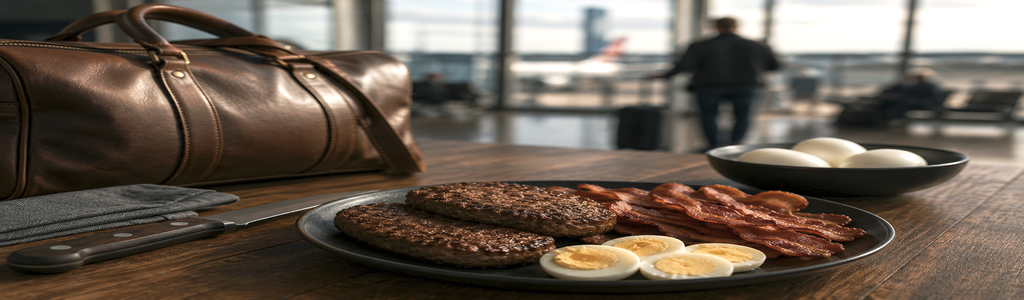
Traveling while carnivore doesn’t have to be stressful.
On the road, Five Guys, Wendy’s, Steak ’n Shake, and local BBQ joints become your best friends.
In airports, you’ll almost always find a burger place, a breakfast counter, or a steak bowl option.
Hotels will give you extra eggs, bacon, or butter if you ask.
Once you know where to look, you’ll realize that carnivore options are everywhere — you just have to see them.
Confidence Is the Real Secret
Staying carnivore while eating out isn’t about perfection. It’s about confidence. It’s about knowing what you need, asking for it clearly, and enjoying your meal without guilt or hesitation.
The more you practice, the easier it becomes. Soon, you’ll walk into any restaurant with the quiet assurance that you can stay on track no matter what’s on the menu.
Because the truth is simple:
You can stay carnivore anywhere.
And now, you know exactly how.
Carnivore and Mental Clarity: Why Your Brain Thrives on Meat
Carnivore and Mental Clarity: Why Your Brain Thrives on Meat
Most people assume mental clarity comes from cutting carbs, meditating more, or drinking another energy drink. But for thousands of people trying the carnivore diet, something far more dramatic happens — a sudden shift in the way the brain feels and functions. Thoughts sharpen. Fog lifts. Focus returns. And it happens with a speed that surprises even the most skeptical beginners. This isn’t a placebo effect or a motivational surge from starting a new diet. It’s a real, measurable change in how the brain operates when it finally receives the fuel it was designed to run on.
Mental clarity is often described as a feeling, but in reality, it’s a combination of cognitive abilities working together. It’s the ease of recalling information without searching for it. It’s the ability to stay focused on a task without drifting. It’s the sense of emotional steadiness that makes decision‑making feel less overwhelming. Many people don’t realize how foggy they’ve been until the fog disappears — and suddenly life feels lighter, calmer, and more manageable. The carnivore diet has a unique way of revealing just how much the modern diet has been clouding the mind.
Why the Carnivore Diet Impacts the Brain So Quickly
One of the most immediate changes people experience on carnivore comes from fuel stability. Carbohydrates create a constant cycle of spikes and crashes, forcing the brain to adapt to inconsistent energy. Meat doesn’t do that. When glucose stops swinging, the brain stops panicking. The result is a steady, predictable stream of energy that supports clear thinking. For readers who prefer a more flexible approach, What Is Ketovore? offers a gentle bridge between keto and carnivore while still supporting this stable fuel environment.
Another reason clarity improves so quickly is the shift toward ketones. Ketones burn cleaner than glucose and produce fewer inflammatory byproducts. They provide a more efficient, more reliable energy source for neurons. Many people describe this transition as “my brain finally turned back on,” a moment when mental fog lifts and thoughts feel crisp again. It’s not magic — it’s simply the brain receiving a fuel source it can use without friction.
Inflammation also plays a major role in mental fog. Plant toxins, seed oils, sugar, and ultra‑processed foods all contribute to neuroinflammation, even in people who don’t feel physically inflamed. When these foods are removed, the brain finally has room to breathe.
There’s also a profound shift in neurotransmitters. Meat provides the amino acids needed to support dopamine, serotonin, and GABA — the chemicals responsible for motivation, mood, and calm focus. When these neurotransmitters rebalance, many carnivore beginners say they feel “even” for the first time in years. Their brain chemistry stabilizes, and with it comes a sense of emotional clarity that’s just as powerful as the cognitive clarity.
What Mental Clarity Feels Like on Carnivore
People describe the mental clarity of carnivore in ways that are surprisingly consistent. Some say, “My brain turned back on,” as if a switch flipped. Others notice they can finish tasks again without drifting or feeling overwhelmed. Many don’t realize how foggy they were until the fog disappears, revealing a version of themselves they haven’t felt in years. This is the psychological side of metabolic healing — the moment when the brain stops fighting for stability and begins functioning the way it was meant to.
Understanding the Roots of Brain Fog
Brain fog rarely comes from a single cause. It’s usually the result of several stressors working together: unstable blood sugar, chronic inflammation, food sensitivities, poor sleep, nutrient deficiencies, seed oils, and ultra‑processed foods. The modern diet is full of these triggers, and most people live in a constant state of low‑grade cognitive stress without realizing it. Carnivore removes nearly all of these stressors at once, which is why clarity often returns so quickly. When the brain is no longer inflamed, under‑fueled, or chemically imbalanced, it can finally function the way it was designed to.
How Long It Takes to Notice a Difference
The timeline for mental clarity varies, but most people notice a shift within the first few days. The first 24 to 72 hours often bring a reduction in fog as blood sugar stabilizes. Within one to two weeks, focus improves and thoughts feel more organized. By three to six weeks, mental energy becomes stable and predictable. The transition is even smoother when electrolytes are dialed in, which is why many readers benefit from exploring Electrolytes on Carnivore for guidance.
Supporting Mental Clarity Through the Carnivore Lifestyle
Maximizing mental clarity on carnivore isn’t complicated. The brain thrives on fat, so prioritizing fatty cuts makes a noticeable difference. Consistent electrolytes support stable energy and prevent the sluggishness that can appear during adaptation. Eating enough food is essential — under‑eating is one of the fastest ways to lose clarity. Some people find that avoiding dairy early on helps reduce inflammation, and staying hydrated supports every part of the process. For readers who are new to this way of eating, Carnivore for Beginners offers a simple, supportive starting point.

The Real‑World Impact of Mental Clarity
The benefits of mental clarity extend far beyond the diet itself. Carnivore beginners often report better productivity at work, more patience with family, easier decision‑making, and a sense of emotional stability they haven’t felt in years. These aren’t small changes — they shape how people show up in their daily lives. For those who want consistent, high‑quality, Carnivore Club offers convenient grab‑and‑go options that support the lifestyle without stress.
Consider This
If your brain feels foggy, scattered, or exhausted, it’s not a character flaw — it’s chemistry. Your brain is an organ, and like every organ, it depends on the fuel you give it. For many people, that fuel is meat. When you remove the foods that inflame the brain and replace them with foods that nourish it, clarity isn’t a miracle. It’s the natural state your mind was designed for.

Carnivore vs Ketovore: How to Choose the Path That Fits You
Carnivore vs Ketovore: How to Choose the Path That Fits You
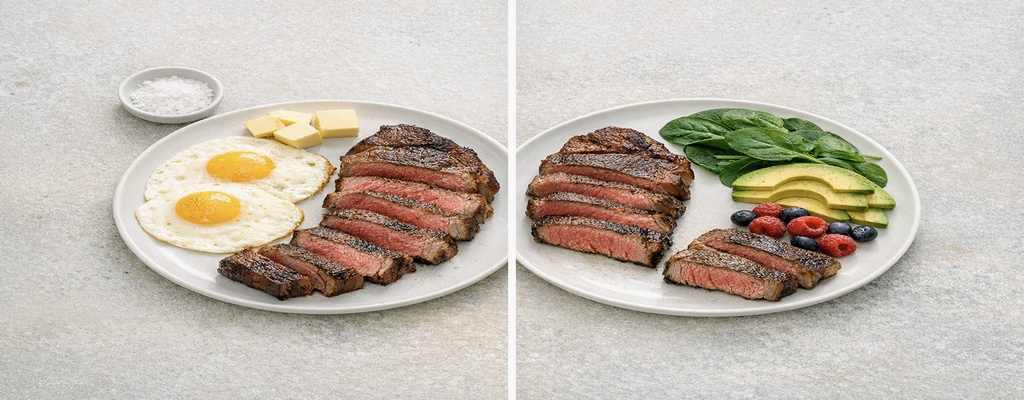
If you’ve spent any time in the low‑carb world, you’ve probably noticed something: people love to argue about Carnivore and Ketovore. One group says you should eat only meat. Another says you should eat mostly meat. Someone else insists you need a handful of berries “for antioxidants.” And then there’s the person who swears they feel amazing on Carnivore… except on weekends… unless it’s a holiday… or a birthday.
It’s no wonder people feel confused.
But here’s the truth most people never say out loud:
You don’t need someone else’s rules — you need a path that fits YOU.
Carnivore and Ketovore are not enemies. They’re not rivals. They’re not competing diets. They’re simply two different ways of eating that can serve you in different seasons of your life. And once you understand how each one works, choosing between them becomes surprisingly simple.
Let’s break it down — not with complicated charts or strict rules — but with real‑life clarity.
Carnivore: The “Just Eat Meat” Reset
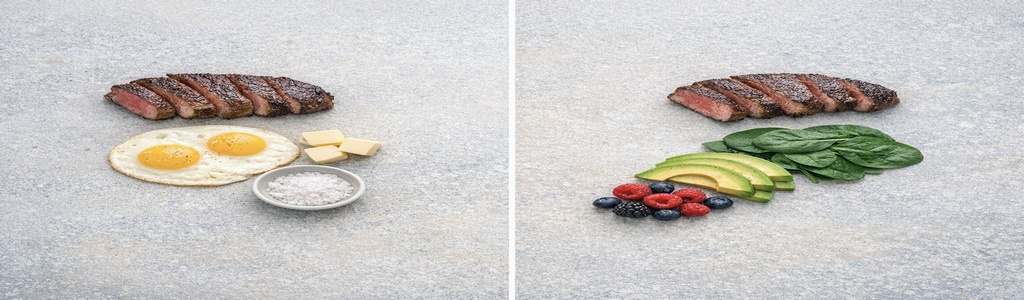
Carnivore is the simplest way of eating you’ll ever try. It’s meat, eggs, seafood, animal fats, salt, and water. That’s it. No tracking. No macros. No plants. No guessing. It’s the nutritional equivalent of clearing your desk, wiping the slate clean, and starting fresh.
People don’t choose Carnivore because it’s trendy. They choose it because it removes the noise. It takes away the cravings, the constant decision‑making, the “should I eat this?” mental chatter. It gives you a clean reset — physically and mentally.
But Carnivore isn’t just about food. It’s about clarity. It’s about learning what your body actually likes without the interference of carbs, sugar, or plant foods that may or may not agree with you.
Of course, Carnivore has its challenges. Social events can feel awkward. Eating out takes planning. And the mental shift of removing all plant foods can feel bigger than the physical shift. But for many people, the simplicity is worth it. It’s a season of focus — a season of learning — a season of getting back in control.
Ketovore: The “Mostly Meat” Lifestyle
If Carnivore is the clean slate, Ketovore is the comfortable middle ground. It’s still animal‑based, still low‑carb, still simple — but with a little more flexibility. You can include low‑carb vegetables, berries, avocado, seasonings, and the occasional keto‑friendly food without losing the structure that keeps you on track.
Ketovore feels easier for many people because it fits real life. You can go to a family dinner without feeling like an alien. You can enjoy a small side of vegetables without guilt. You can live in a way that feels sustainable long‑term.
But flexibility comes with responsibility. Ketovore requires honesty. It requires awareness. It requires you to know the difference between “a little flexibility” and “I’m sliding back into old habits.” When done well, Ketovore is a powerful, balanced lifestyle. When done carelessly, it becomes keto‑ish — and that’s where people get stuck.
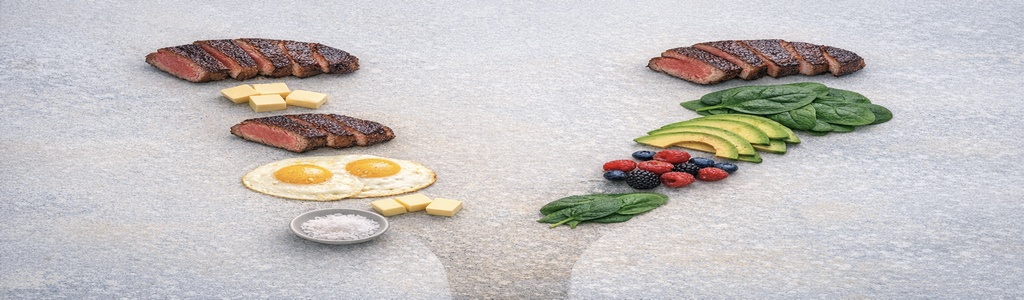
So Which One Is Better?
That’s the wrong question — and it’s why so many people stay confused.
The real question is:
Which one fits your life, your personality, and your goals right now?
Carnivore is perfect if you want simplicity, structure, and a clean reset.
Ketovore is perfect if you want flexibility, variety, and long‑term balance.
Neither is superior. They’re simply different tools.
Think of it like this:
- Carnivore is the “declutter your entire house” moment.
- Ketovore is the “keep your house clean without going extreme” rhythm.
Both matter. Both help. Both work.
Carnivore vs Ketovore: A Real‑Life Comparison
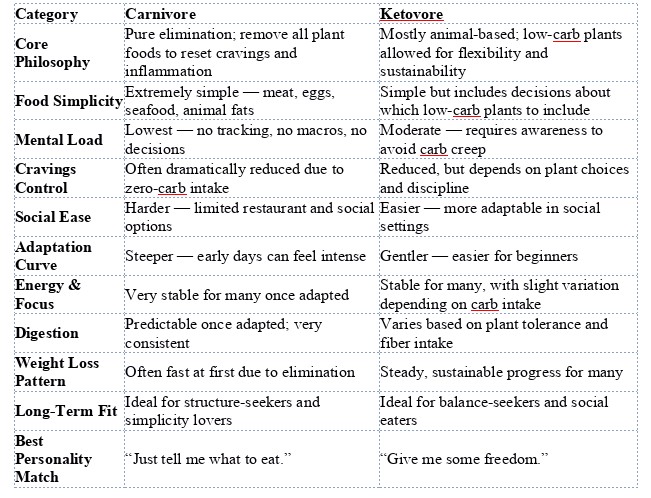
How to Know Which One Fits You
Here’s the simplest way to decide:
If you’re overwhelmed, stressed, craving everything, or stuck in a cycle of starting and stopping — Carnivore gives you the reset you need.
If you’re stable, confident, and want a lifestyle you can live with long‑term — Ketovore gives you the flexibility you want.
And here’s the part most people never tell you:
You can switch between them anytime.
You’re not locked in. You’re not failing if you adjust. You’re simply learning what works for you — and that’s the whole point.
Real‑Life Examples
Take the Overthinker. They start Ketovore because it feels easier… but the constant decisions wear them down. They switch to Carnivore and suddenly feel free.
Then there’s the Social Eater. They start Carnivore and feel amazing — until they feel isolated. They shift to Ketovore and find a balance that lets them enjoy life without losing progress.
And the Beginner? They start Ketovore, build confidence, then transition to Carnivore when they’re ready for a deeper reset.
Different people. Different needs. Different seasons.
My Experience‑Based Recommendation
**NOTE** This is NOT medical advice. Always seek the guidance from your physician before beginning any type of exerciseprogram or a change in diet.
Start Ketovore if you want flexibility.
Start Carnivore if you want clarity.
Move between them as needed.
Use each one as a tool, not a prison.
You’re not choosing a diet.
You’re choosing a direction.
Carnivore is a way of eating (WOE)
Carnivore is NOT a diet perse, if you want to refer to it as a diet. It will be the elimination diet.
Final Takeaway
Carnivore and Ketovore aren’t about perfection. They’re about progress. They’re about learning your body. They’re about finding a way of eating that gives you energy, confidence, and control.
You don’t have to choose forever.
You just have to choose what works for you right now — and give yourself permission to grow.
Ketovore 101: The Easiest Way to Transition from Keto to Carnivore
Ketovore 101: The Easiest Way to Transition from Keto to Carnivore
If Keto Isn’t Working Anymore, Ketovore Might Be the Bridge You Need
Transitioning into a Ketovore lifestyle doesn’t have to be confusing or overwhelming. In this guide, you’ll learn exactly how a ketovore transition works, why it’s easier than strict keto, and how simple meat‑focused meals can help you feel better with less effort.
This satisfies:
- Keyword in first paragraph
- Keyword early in the article
- Clear topic introduction
This is exactly where Ketovore steps in.
It’s the middle ground that makes sense.
It’s the bridge between keto and carnivore that removes the pressure, the confusion, and the fear of doing it “wrong.”
Ketovore gives you the benefits of a meat‑focused diet while still allowing a few simple, low‑toxicity foods that make the transition easier. It’s flexible, forgiving, and surprisingly freeing. And by the end of this guide, you’ll understand exactly how it works — and why so many people use it as their stepping stone toward a healthier, simpler way of eating.
What Is Ketovore?
At its core, Ketovore is a meat‑first, ultra‑low‑carb way of eating. Think of it as keto stripped down to what actually works — without the snacks, the complicated recipes, or the endless macro math. You still enjoy the simplicity and nutrient density of animal foods, but you keep a few optional extras like eggs, dairy, avocado, pickles, or spices. These aren’t required, but they make the transition feel less intimidating for beginners.
If you want to understand the “destination” Ketovore often leads to, you can explore these guides:
→ What Is the Carnivore Diet? A Beginner’s Guide
Ketovore sits comfortably between the two worlds — structured enough to help you heal, flexible enough to help you start.
Why People Choose Ketovore
Most people don’t leave keto because they failed. They leave because keto became too complicated. The constant tracking, the “keto‑approved” snacks, the hidden carbs, the almond‑flour everything — it all adds up. Ketovore removes the noise and brings you back to real food.
When you shift toward Ketovore, digestion often improves. Cravings begin to fade. Energy becomes steadier. Many people notice clearer thinking, better sleep, and easier weight loss — not because they’re eating less, but because they’re eating simpler. And if you eventually want to try carnivore, Ketovore makes that transition feel natural instead of extreme.
Why This Works (Science‑Lite, Beginner‑Friendly)
Ketovore works because it aligns with how your body is designed to function.
- Satiety: Animal foods are naturally high in protein and healthy fats, which signal fullness more effectively than plant‑based carbs.
- Stable insulin: By removing carbs and processed foods, your blood sugar stops spiking and crashing. This alone reduces cravings dramatically.
- Nutrient density: Meat provides bioavailable vitamins and minerals your body can absorb easily — no complicated digestion required.
- Reduced inflammation: Removing seed oils and processed foods gives your gut and immune system a break.
- Simplified digestion: Many people discover that their bloating, gas, or discomfort disappears when they reduce plant fibers and anti‑nutrients.
You don’t need a science degree to understand Ketovore. You just need to feel the difference — and most people do within days.
How Ketovore Compares to Keto and Carnivore
Keto is built around macros. Carnivore is built around animal foods. Ketovore is built around clarity.
Keto allows a wide range of plant foods, which can be helpful — but also overwhelming. Ketovore narrows the focus to foods that support metabolic healing without triggering cravings or inflammation. Carnivore removes plants entirely, which can be powerful but intimidating for beginners.
Ketovore gives you the best of both worlds: the simplicity of carnivore with the gentle flexibility of keto.
What You Can Eat on Ketovore
Instead of thinking in terms of “allowed” and “not allowed,” Ketovore encourages you to think in terms of foundation and support.
The foundation is always animal foods: beef, pork, lamb, bison, eggs, seafood, bacon, butter, ghee, and tallow. These foods keep you full, satisfied, and nourished without the blood‑sugar roller coaster.
The support foods — the optional extras — are there to help you transition without feeling deprived. A slice of hard cheese, a few olives, a half avocado, a sprinkle of herbs, or a cup of coffee can make the shift feel more doable. They’re not required, but they’re available if they help you stay consistent.
Electrolytes matter more than most people realize. LMNT, Redmond, and Keto Chow are excellent options, especially during the first week.
What to Avoid (and Why It Matters)
Ketovore works because it removes the foods that keep you stuck. Seed oils, grains, sugars, high‑oxalate vegetables, almond flour, coconut flour, and processed keto snacks all interfere with healing — not because they’re “bad,” but because they keep your cravings alive. They make your hunger louder. They make your energy unpredictable. They make your progress slower.
Removing them gives your body room to breathe.

How to Start Ketovore: A Gentle 3‑Week Transition
The beauty of Ketovore is that you don’t have to overhaul everything at once. You simply shift your focus week by week.
During the first few days, you clean up your keto habits by removing the snacks and the hidden carbs. You focus on meat, eggs, butter, and salt. By the end of the first week, most people already feel calmer around food.
In week two, meals become simpler. You naturally gravitate toward fattier cuts, fewer extras, and more satiety. You stop thinking about food all day because your body finally feels nourished.
By week three, many people feel ready to slide closer to carnivore — not because they “have to,” but because they want to. Their digestion feels better. Their cravings are quieter. Their energy is steadier.
If you want help with meals during this stage, these guides fit perfectly:
→Your First Carnivore Grocery List
How to Know It’s Working
You’ll know Ketovore is working when:
- Your cravings begin to fade
- You feel full longer between meals
- Your digestion becomes more predictable
- Your energy stops crashing in the afternoon
- You stop thinking about food all day
- You feel calmer and more stable emotionally
- Your sleep improves
- Your clothes begin to fit differently
These are the early signs of metabolic healing — and they often show up before the scale moves.
Common Mistakes (and How to Avoid Them)
Most Ketovore mistakes come from trying to do keto rules on a Ketovore plan. People eat too lean, snack too often, or rely too heavily on dairy. Others forget to salt their food or under‑eat because they’re still thinking in “diet mode.”
The fix is simple:
Eat real food. Eat enough of it. Salt generously. Drink electrolytes. And let your body adjust.
What a Day of Ketovore Eating Might Look Like
A Ketovore day doesn’t require recipes or complicated planning. It might be a ribeye and eggs for breakfast, a ground beef bowl with a few slices of avocado for lunch, and salmon with butter for dinner. Or maybe it’s burger patties with cheese, pork chops with ghee, or bacon and eggs with coffee.
It’s simple, satisfying, and predictable — in the best way.
Who Ketovore Is Perfect For
Ketovore is ideal for people who feel stuck on keto, curious about carnivore, or overwhelmed by food rules. It’s for anyone who wants metabolic healing without the pressure of perfection. It’s for people who want to lose weight without tracking macros. And it’s for those who want to feel better without obsessing over every bite.

When You’ll Know You’re Ready for Carnivore
You’ll feel it.
Your cravings will quiet down.
Your digestion will smooth out.
Your energy will stabilize.
Your meals will feel simpler.
And you’ll start craving the clarity that comes from eating only animal foods.
Mini‑FAQ: Quick Answers for Beginners
Can I drink coffee on Ketovore?
Yes. Coffee is optional, not required. If it triggers anxiety or cravings, reduce or remove it.
How many carbs can I have?
Most people stay under 10–20g per day, but Ketovore isn’t about counting — it’s about simplicity.
Is dairy allowed?
Yes, but keep it minimal. Hard cheeses work better than soft ones.
Do I need supplements?
Not necessarily. Electrolytes are the only common need, especially early on.
Can I lose weight without tracking macros?
Absolutely. Satiety from animal foods naturally regulates appetite.
Can I eat out on Ketovore?
Yes — burgers without buns, steaks, eggs, bacon, wings, seafood, etc.
Consider This
Ketovore isn’t about perfection — it’s about progress. It’s the bridge between where you are and where you want to be. If keto has stopped working… if carnivore feels intimidating… if you’re tired of overthinking food… Ketovore gives you a simple, sustainable path forward.
You don’t have to jump straight into carnivore.
You just have to take the next step.
A ketovore transition doesn’t require perfection, tracking, or complicated rules. It’s simply a shift toward real food, nutrient‑dense meals, and a lifestyle that supports energy, clarity, and long‑term health. Start small, stay consistent, and let your results speak for themselves.
Organ Meats for Carnivore Beginners: A Gentle Introduction
Organ Meats for Carnivore Beginners: A Gentle Introduction
Organ meats are the unsung heroes of the carnivore diet. Packed with nutrients, affordable, and surprisingly versatile, they offer a powerful way to deepen your commitment to ancestral eating. But for many newcomers, they’re also intimidating. This guide is here to change that — with practical tips, emotional encouragement, and a clear path forward.
Why Organ Meats Matter
- Nutrient Density: Liver, heart, kidney, and spleen are loaded with vitamins A, B12, iron, zinc, and CoQ10.
- Affordability: Compared to ribeyes and tenderloins, organ meats are budget-friendly and often available in bulk.
- Sustainability: Eating nose-to-tail honors the whole animal and reduces waste.
- Hormonal Support: Many organ meats contain compounds that support thyroid, adrenal, and reproductive health.
“Eat the whole animal. Nature doesn’t waste—and neither should you.”

Start Here: Easiest Cuts for Beginners
If you’re new to organ meats, start with cuts that are mild in flavor and easy to prepare:
| Cut | Flavor Profile | Prep Tip |
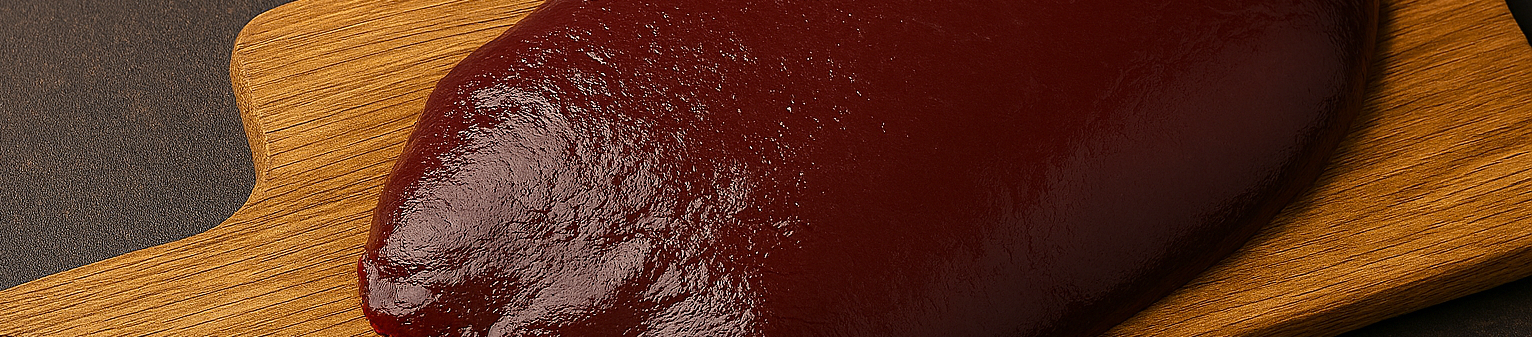
| Beef Liver | Rich, slightly metallic | Pan-fry with salt and butter |
| Heart | Meaty, lean | Slice thin and grill or sauté |
| Tongue | Tender, beefy | Slow cook, peel, and slice |
| Spleen | Earthy, dense | Mix into ground beef |
Pro Tip: Mix small portions of liver or spleen into ground beef patties to ease into the taste.
️ How to Cook Organ Meats Without Fear
- Keep it simple: Salt, butter, and cast iron go a long way.
- Don’t overcook: Especially liver — it gets chalky fast.
- Use broth or fat: Helps mellow stronger flavors.
- Try slow cooking: Tongue and kidney shine when braised.
Storage Tips
Organ meats are best enjoyed fresh, but with a little planning, you can keep them on hand without waste or stress.
- Freeze in 4–6 oz portions for easy rotation and meal prep.
- Vacuum seal or use airtight containers to preserve freshness and prevent freezer burn.
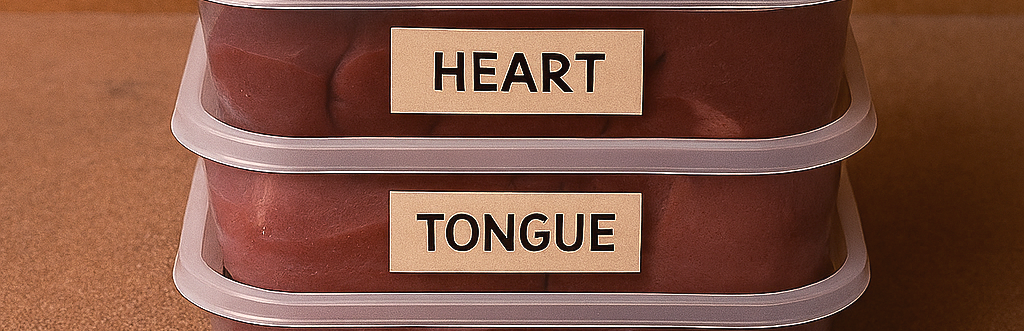
- Label clearly — some cuts look alike once frozen, especially liver and spleen.
- Store separately from muscle meats to avoid cross-contamination and flavor transfer.
- Use within 3 months for optimal taste and nutrient retention.
Tip: If you’re buying in bulk, consider organizing your freezer by cut type — liver, heart, tongue — so you can rotate weekly and avoid burnout.
Consider This
Organ meats aren’t just for hardcore carnivores — they’re for anyone ready to level up their health. Start small, stay consistent, and remember: every bite is a vote for vitality. These cuts may challenge your palate, but they’ll reward your body in ways no supplement ever could.
You’re not just eating differently — you’re reclaiming ancestral wisdom.
You’re not just nourishing your body — you’re honoring the whole animal.
You’re not just surviving — you’re building a foundation for long-term strength.
“Respect the animal. Honor the nourishment. Reclaim your strength.”
Cravings, Meet Carnivore
Cravings, Meet Carnivore: How to Stay Strong When Temptation Strikes

You’re two weeks in. Your energy’s climbing, your jeans fit better, and there’s momentum building. Then, out of nowhere, it hits—the scent of fresh-baked cinnamon rolls wafting out of a storefront, or a sudden mental image of your favorite childhood snack. Cravings like these are part of the carnivore transition, especially in those early weeks. But here’s the truth: they aren’t signals of failure—they’re signs of healing.
Cravings surface when your body and brain begin to unlearn old habits. Physically, you’re shifting away from dependence on carbohydrates and sugars. Emotionally, you’re detaching from comfort foods that once played leading roles in celebrations, stress relief, or daily routine. These cravings aren’t red flags—they’re just notifications. The body may be asking for more fat, more electrolytes, or even a moment of stillness and reflection.
So how do you respond when temptation whispers? Start by feeding yourself well. Fat is your ally—it provides deep satiety and helps silence false hunger signals. Many carnivores find that cravings intensify if they under-eat protein or fat, especially during the adaptation phase. If you’re feeling off, don’t try to “beat” the craving—answer it with a steak. Seriously. This isn’t a game of restriction; it’s about restoration.
Sometimes cravings stem from emotion, not hunger. If you find yourself mindlessly scanning the pantry or dreaming of crunchy snacks, it might be time to get outside. Sunlight, movement, or even a short prayer can disrupt the craving loop and re-center your mind on your goals. And don’t underestimate the power of hydration—low electrolytes can imitate hunger. Sip on bone broth or salt your water if you’re feeling unusually snacky.
Dr. Shawn Baker once said, “Cravings don’t mean you’re failing. They mean you’re healing.” That perspective is powerful. The body protests not because you’re doing something wrong, but because you’re finally doing something right. Many long-time carnivores report that cravings vanish after 30 to 60 days. The path gets smoother—and you get stronger.
Still, it’s okay to use tools along the way. For crunchy urges, pork rinds or crispy bacon can fill the gap. Sweet cravings? If tolerated, unsweetened whipped cream or high-fat cheese in small quantities might help bridge the transition. And for those needing volume, consider making mini “meat muffins” with seasoned ground beef. These are satisfying, easy to prepare in batches, and perfect for staying nourished without breaking your stride.

Consider This
You’re not chasing perfection—you’re building consistency. Every time you navigate a craving without giving in, you grow tougher and more resolved. This lifestyle shift goes beyond what’s on your plate—it redefines how you handle stress, pleasure, and reward.
So when cravings creep in, meet them head-on. Pause. Eat. Pray. Move. You’re not just surviving—you’re healing, thriving, and rewriting your story one bite at a time.
What Are The Types Of Carnivore?
Exploring the Carnivore Diet: A Comprehensive Guide to the different Types of Carnivore.
In recent years, the carnivore diet has emerged as a controversial yet intriguing dietary approach that has captured the attention of health enthusiasts, fitness buffs, and those seeking alternative nutritional strategies. This meat-centric eating plan, which focuses on consuming animal products while excluding most or all plant-based foods, has sparked heated debates in nutrition circles and among the general public. But did you know that the carnivore diet isn’t a one-size-fits-all approach? In fact, there are several variations, each with its own set of rules and potential benefits. Let’s dive deep into the world of carnivore diets and explore their different types, benefits, and considerations.
## Understanding the Carnivore Diet
At its core, the carnivore diet is based on the premise that human beings are primarily meat-eaters and that our bodies are optimally suited to digest and utilize nutrients from animal sources. Proponents argue that by eliminating plant foods, we can avoid potential irritants and anti-nutrients found in vegetables, fruits, and grains, leading to improved digestion, reduced inflammation, and better overall health.
## The Spectrum of Carnivore Diets

### 1. Hardcore Carnivore: The Purist’s Approach
The hardcore carnivore diet is the most stringent version, often referred to as the “lion diet” or “zero-carb diet.” Adherents to this approach consume only:
– Red meats (beef, lamb, pork)
– Poultry (chicken, turkey)
– Fish and seafood
– Eggs
– Water
This version excludes all plant-based foods, most dairy products, and even some animal products like organ meats. The rationale behind this extreme approach is to eliminate all potential dietary irritants and focus solely on the most nutrient-dense animal foods.
**Potential benefits:**
– Simplicity in food choices
– Possible reduction in digestive issues for some individuals
– Potential for rapid weight loss
**Considerations:**
– Risk of nutrient deficiencies, particularly in vitamins C and E, and certain minerals
– May be challenging to sustain long-term
– Potential for high cholesterol intake
### 2. Standard Carnivore: A More Flexible Approach
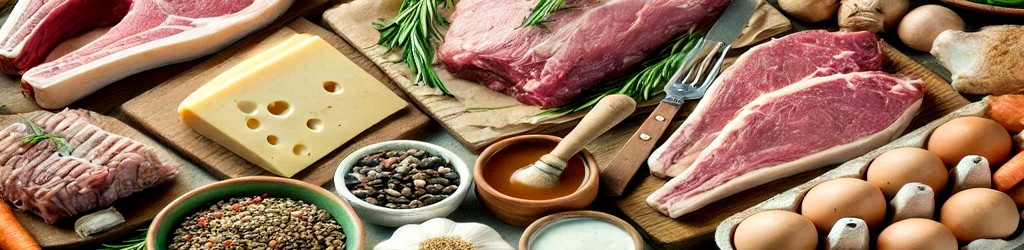
The standard carnivore diet is slightly less restrictive than its hardcore counterpart. It includes:
– All meats (including organ meats)
– Fish and seafood
– Eggs
– Some low-lactose dairy products (like butter and hard cheeses)
– Bone broth
– Water
This version allows for more variety and potentially better nutrient coverage due to the inclusion of organ meats and some dairy.
**Potential benefits:**
– Greater nutrient diversity compared to the hardcore version
– Inclusion of beneficial compounds found in organ meats
– More satisfying for those who enjoy dairy products
**Considerations:**
– Still lacks fiber and plant-based nutrients
– May be high in saturated fat, depending on food choices
### 3. Keto-Carnivore: Bridging Two Popular Diets
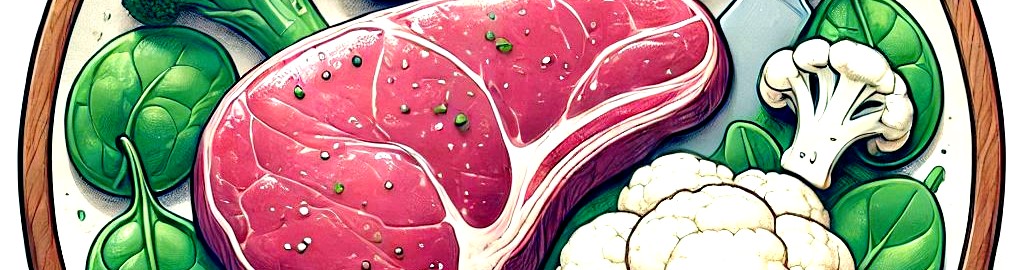
The keto-carnivore diet is the most lenient version, incorporating elements of the ketogenic diet. It typically includes:
– All animal products
– Some low-carb vegetables (in small amounts)
– Limited dairy products
– Certain seasonings and spices (as long as they’re carb-free)
This approach aims to maintain a state of ketosis while still focusing primarily on animal-based foods.
**Potential benefits:**
– More balanced approach with some plant nutrients
– May be easier to sustain long-term
– Combines potential benefits of both carnivore and ketogenic diets
**Considerations:**
– Requires careful planning to maintain ketosis
– May not provide the same level of digestive rest as stricter versions
### 4. Modified Carnivore Diets: Customized Approaches
Some individuals choose to modify the carnivore diet to better suit their preferences or nutritional needs. Popular variations include:
– **Meat and Fruit Carnivore Diet**: Allows for the inclusion of fruits along with animal products, providing more variety and nutrients.
– **Seafood Carnivore Diet**: Focuses primarily on seafood as the main source of animal protein, potentially offering higher levels of omega-3 fatty acids.
– **Greenish Carnivore Diet**: Incorporates small amounts of low-carb vegetables, particularly leafy greens, alongside meat.
These modifications offer different levels of flexibility while still maintaining the core principle of a meat-centric diet.
## The Carnivore Diet: Weighing the Pros and Cons
### Potential Benefits
1. **Simplicity**: The carnivore diet simplifies meal planning and food choices.
2. **Weight loss**: Many people report rapid weight loss, especially in the initial stages.
3. **Reduced inflammation**: Some adherents claim improvements in inflammatory conditions.
4. **Blood sugar control**: The diet may help stabilize blood sugar levels due to its low-carb nature.
5. **Improved mental clarity**: Some report enhanced cognitive function and mood.
### Considerations
1. **Nutrient deficiencies**: The diet may lack essential nutrients found in plant foods.
2. **Digestive issues**: Some people may experience constipation due to lack of fiber.
3. **Cardiovascular concerns**: The high intake of saturated fat may impact heart health.
4. **Sustainability**: The restrictive nature of the diet can make it challenging to maintain long-term.
5. **Social implications**: Following a strict carnivore diet may complicate social dining situations.
## Consider This: Is the Carnivore Diet Right for You?
The carnivore diet, in its various forms, represents a radical departure from conventional dietary wisdom. While some people report significant benefits from this meat-centric approach, it’s important to approach any extreme diet with caution. The long-term effects of a carnivore diet are not yet well-understood, and it may not be suitable for everyone.
Before embarking on any significant dietary change, it’s crucial to consult with a healthcare professional or a registered dietitian. They can help you assess your individual needs, potential risks, and whether a carnivore diet – or elements of it – might be appropriate for your health goals.
Remember, the best diet is one that you can sustain long-term and that supports your overall health and well-being. Whether you’re curious about the carnivore diet or simply looking to optimize your nutrition, the key is to listen to your body and make informed choices based on scientific evidence and professional guidance.
What are your thoughts on the carnivore diet? Have you tried any of its variations? Share your experiences and opinions in the comments below!
10 Startling Misconceptions About the Carnivore Diet Debunked
10 Startling Misconceptions About the Carnivore Diet Debunked
The Carnivore Diet has gained popularity in recent years, attracting attention for its extreme approach of consuming only animal products. While some swear by its benefits, others raise concerns about its safety and nutritional adequacy. In this article, we’ll explore ten common misconceptions about the Carnivore Diet, providing clarity and insight into this controversial dietary choice.
### 1. “It’s Just a Protein-Packed Meat Fest”
Contrary to popular belief, the Carnivore Diet isn’t about gorging on protein. In fact,

it’s a high-fat, moderate-protein approach. Imagine sinking your teeth into a juicy, marbled steak – that’s the essence of this diet. Most calories come from animal fats, not protein. This fat-forward approach is crucial for maintaining energy levels and hormonal balance. So, while you might picture plate after plate of chicken breast, the reality is far more indulgent.
### 2. “You’ll Be Malnourished in No Time”
The idea that eliminating plants leads to nutrient deficiencies is pervasive. But here’s the kicker: animal products are nutritional powerhouses. Red meat, for instance, is packed with iron, zinc, and B vitamins. Organ meats? They’re nature’s multivitamins. Even the elusive vitamin C, often cited as a concern, is present in fresh meat, particularly organ meats like liver. While the long-term effects of plant exclusion are still under study, many carnivore dieters report feeling more vibrant than ever.
### 3. “Hello, Scurvy!”
The specter of scurvy looms large in discussions about the Carnivore Diet. It’s a reasonable concern – after all, we’ve been taught that vitamin C comes from fruits and vegetables. But here’s the plot twist: fresh meat contains small amounts of vitamin C, especially in organ meats like liver. Moreover, the body’s need for vitamin C decreases on a low-carb diet due to lower insulin levels and reduced oxidative stress. Fascinatingly, some carnivore dieters report no issues with vitamin C deficiency even after years on the diet.
### 4. “Your Heart Will Hate You”
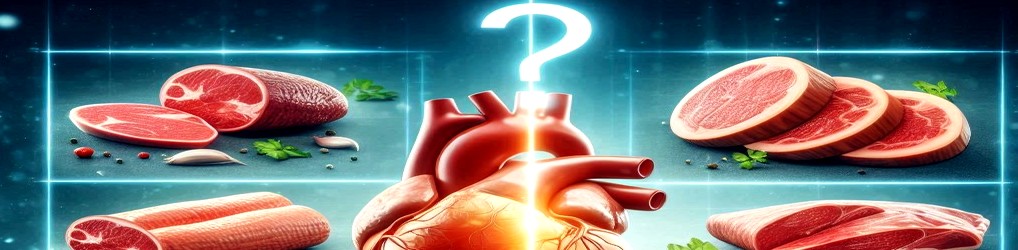
The high saturated fat content of the Carnivore Diet often raises eyebrows and blood pressure concerns. But what if everything we thought we knew about saturated fat was wrong? Recent studies have begun to challenge the long-held belief that saturated fat is the villain in heart disease. For instance, a 2020 meta-analysis published in *The American Journal of Clinical Nutrition* found no significant association between saturated fat intake and cardiovascular disease risk.
Additionally, some researchers argue that inflammation—not saturated fat—might be the real culprit behind heart disease. This emerging perspective is prompting a reevaluation of dietary guidelines and encouraging individuals to consider their own metabolic responses to different types of fats.
### 5. “Prepare for Perpetual Constipation”
No fiber? Must mean no… movement, right? Not so fast. While it’s true that the Carnivore Diet is devoid of dietary fiber, many followers report that after an initial adjustment period, their digestive systems function smoothly. Some even claim improved digestion due to reduced gut irritation from plant fibers or anti-nutrients found in certain foods. The theory? The body adapts to efficiently process meat and fat, reducing the need for fiber.
### 6. “It’s Impossible to Stick to Long-Term”
The idea of eating only animal products for life seems daunting if not impossible. Yet there are individuals who have followed this diet for years, reporting sustained benefits. Dr. Shawn Baker, a prominent advocate who has been carnivore for over five years, exemplifies this commitment. While long-term studies are lacking, these anecdotal reports are intriguing and raise questions about our understanding of dietary sustainability.
### 7. “It’s Just Keto with Extra Steps”
While both the Carnivore and Keto diets are low-carb, high-fat approaches, they’re far from identical twins. The Carnivore Diet takes things to the extreme by eliminating all plant foods—no avocados, no nuts, no low-carb veggies—staples in many keto diets. The result? A potentially different metabolic state and unique challenges and benefits that warrant exploration.
### 8. “It’s Just Another Weight Loss Fad”
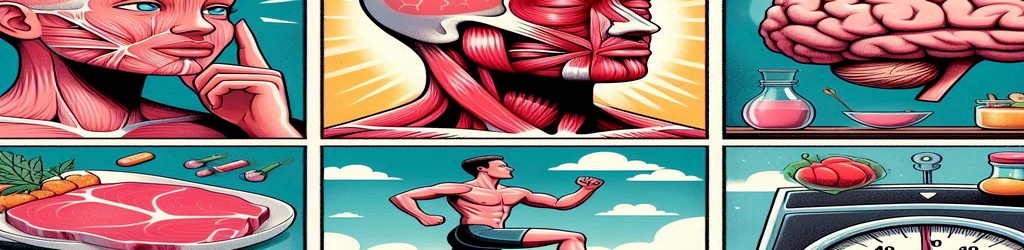
Weight loss often occurs on the Carnivore Diet; however, viewing it solely as a weight loss strategy misses the bigger picture. Proponents report a range of benefits beyond weight loss: reduced inflammation, improved mental clarity, enhanced energy levels, and even alleviation of autoimmune symptoms like arthritis or psoriasis have been noted by some followers.
This broader perspective makes the diet intriguing for many looking for more than just a quick fix for weight loss; it may offer potential therapeutic tools for specific conditions.
### 9. “It’s an Environmental Disaster”
The environmental impact of a meat-only diet is a hot-button issue that cannot be ignored. Critics argue it’s unsustainable and harmful to the planet due to greenhouse gas emissions associated with livestock farming. However, supporters counter with discussions about regenerative agriculture practices that can mitigate these concerns.
For example, well-managed grazing can improve soil health by promoting biodiversity and sequestering carbon dioxide from the atmosphere—a process known as carbon farming. This complex issue invites us to reconsider our understanding of sustainable food systems and encourages dialogue around responsible meat consumption.
### 10. “Anyone Can Try It Safely”
While the Carnivore Diet has its enthusiasts, it’s not a one-size-fits-all solution. People with certain health conditions—such as kidney disease or specific genetic disorders—may need to avoid high-protein diets due to potential complications related to protein metabolism or kidney function.
Pregnant women and children should also approach such restrictive diets with caution due to their unique nutritional needs during growth and development phases. As with any significant dietary change, consulting with a healthcare professional is crucial before diving into this unconventional eating plan.

## Consider This
The Carnivore Diet challenges many long-held beliefs about nutrition and health while sparking curiosity about our dietary choices’ complexities and implications. While it remains controversial and requires more research to fully understand its long-term effects and benefits, exploring these misconceptions can provide valuable insights into this unconventional approach to eating.
Whether you’re considering trying it or simply curious about its claims, understanding these misconceptions can help you navigate the meaty debates surrounding this diet while empowering you to make informed decisions about your own health journey.
Carnivore and Intermittent Fasting?
How Combining Intermittent Fasting and the Carnivore Diet Boosts Health and Helps You Stay on Track
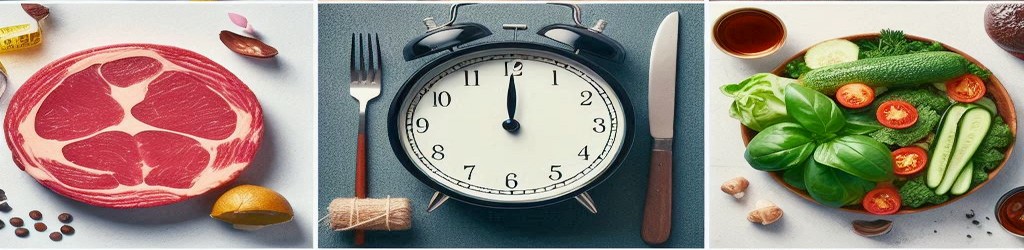
Combining the Carnivore diet and intermittent fasting (IF) has grown in popularity as a way to optimize health, increase mental clarity, and make fasting easier. Both the Carnivore diet—where you eat only animal-based foods—and intermittent fasting—where you cycle between periods of eating and fasting—have benefits on their own. Together, they can be even more powerful.
In this post, I’ll share my personal approach, where I use intermittent fasting as a “reset” tool when I slip from the Carnivore diet, fasting as long as possible to realign my habits. This post will cover why IF and Carnivore work well together, the benefits of this combination, and practical tips to make it a sustainable lifestyle choice. Whether you’re new to either or both practices, you’ll find insights here that could enhance your health journey.
Why Pair the Carnivore Diet with Intermittent Fasting?
Both the Carnivore diet and IF help the body enter a state of fat-burning, or ketosis, which many people associate with increased energy, mental clarity, and reduced cravings. Since the Carnivore diet naturally minimizes insulin response due to its lack of carbohydrates, it can support the fasting process by keeping blood sugar stable, which prevents energy crashes and hunger spikes.
Personal Insight:
In my own experience, the Carnivore diet’s focus on high-fat and high-protein meals has made it easier for me to fast for longer periods. I find that when I stick to Carnivore, I’m rarely hungry, which makes it easier to ease into a fasting window. However, if I slip up or have a day when I eat outside of the Carnivore plan, using fasting as a reset helps me clear out cravings and get back on track.
How Intermittent Fasting Works with the Carnivore Diet
1. Metabolic Flexibility
The Carnivore diet and intermittent fasting both encourage the body to burn fat instead of carbohydrates for fuel. When fasting, the body has no incoming food for fuel, so it starts using stored body fat, leading to increased fat-burning.
– **On Carnivore:** Eating only animal products minimizes carbohydrate intake, making it easier to shift into fat-burning mode when you fast.
– **During a “Reset Fast”:** I use fasting as a way to quickly get my body back into fat-burning mode after deviating from Carnivore. It helps curb cravings and lets me feel the benefits of ketosis sooner.
2. Appetite Regulation
One of the benefits of the Carnivore diet is that the high-fat and high-protein foods are extremely satiating, making you feel full and reducing cravings. Pairing this with intermittent fasting helps you control your eating window without feeling deprived.
Personal Experience:
When I follow Carnivore consistently, I find that my appetite naturally shrinks, which makes it easier to stick to an eating window. If I slip up, fasting as a reset helps me regain control over my hunger.
3. Mental Clarity and Focus
Many people report a sense of heightened mental clarity on both the Carnivore diet and intermittent fasting. When your body is in ketosis, the brain uses ketones for fuel, which can provide a steady, clear-headed focus.
During a Fasted Reset:
I notice that after a few hours into a fast, my mind feels clearer and cravings diminish, making it easier to focus on other priorities instead of food. It’s like a mental reset that helps me recommit to my goals.
Benefits of Combining Intermittent Fasting and the Carnivore Diet
1. Reduced Cravings and Stable Energy
Fasting can be an effective way to “reset” after slipping from the Carnivore diet, because it helps diminish carb cravings that might have resurfaced.
-Practical Tip:
After a period of fasting, I find it’s easier to stick to Carnivore because I’ve given my body time to adjust and reset, and I feel less tempted by non-Carnivore foods.
2. Improved Digestion
Both the Carnivore diet and intermittent fasting can improve digestion by simplifying what you consume and giving your digestive system a break. Carnivore’s elimination of fiber, sugars, and other fermentable foods can reduce bloating and gas, while fasting periods allow your gut to fully rest.
– Practical Tip:
Fasting after slipping off the Carnivore diet gives my gut a break from any irritants I may have eaten, which helps reduce bloating and lets my body recover.
3. Enhanced Weight Management
For those looking to manage weight, the combination of a nutrient-dense Carnivore diet and structured fasting windows can help you avoid overeating and stimulate fat loss through ketosis.
– Personal Insight:
When I use fasting as a reset after a non-Carnivore meal, I find it helps me quickly shed any water weight or bloat, which is encouraging and motivates me to stick with Carnivore.
Tips for Combining Intermittent Fasting and the Carnivore Diet
1. Start with a Manageable Fasting Window
If you’re new to fasting, consider starting with a 16:8 schedule, where you fast for 16 hours and eat during an 8-hour window. You can adjust this over time based on your comfort level and schedule.
-My Approach:
After a slip from Carnivore, I usually aim for a longer fast to reset, but if you’re just beginning, start small. You can gradually build up to longer fasts as your body adjusts.
2. Stay Hydrated and Consider Electrolytes
On the Carnivore diet, you might experience lower mineral levels, especially sodium, since animal foods alone don’t always provide enough. Drink water and add a pinch of salt or electrolytes to help prevent dehydration, especially during extended fasts.
-Personal Tip:
I keep salt handy during fasting windows, as it helps curb cravings and keeps my energy steady.
3. Listen to Your Body
When fasting, listen to your body’s signals. If you feel overly fatigued or lightheaded, consider breaking your fast with a nutrient-dense, animal-based meal to replenish your body.
-My Strategy:
I aim to fast as long as possible after a deviation but stay flexible if my body signals it’s time to eat. Breaking my fast with a small portion of fatty meat, like ribeye, helps me ease back into the Carnivore diet without causing digestive distress.
-Adaptation Tips:
For those new to this combination, the first few days or weeks can come with adaptation symptoms as the body adjusts to using fat as its primary fuel source. You might feel more tired than usual or experience increased thirst, which is normal as your body depletes stored glycogen and needs extra water. Staying hydrated and adding electrolytes can help ease these symptoms.
Consider This:
Most of us already practice some form of intermittent fasting—we naturally fast while we sleep. If you sleep 7-8 hours a night, that’s already a fasting period without conscious effort. Building on this fasting period with a specific eating window can enhance the benefits. Personally, I aim for a 6-hour eating window, though I sometimes exceed my fasting window by a few hours and occasionally fall short. The key is finding a rhythm that works for you, allowing some flexibility.
When combining intermittent fasting with the Carnivore diet, remember to listen to your body and adjust your window as needed. You may find that the high-fat, high-protein Carnivore meals make it easier to fast for longer periods. If you’re new to this, start small, such as adding a couple of fasting hours to your sleep-based fast. Over time, you may build up to a longer fasting window and find a balance that fits your lifestyle and goals.
It’s not about perfection but about consistency and finding what feels sustainable for you. By tuning into your body’s signals, you’ll be better equipped to make adjustments and get the most out of this approach, whether it’s helping you manage cravings, boost energy, or keep you on track with your dietary goals.