Keto diet
Carnivore vs Ketovore: How to Choose the Path That Fits You
Carnivore vs Ketovore: How to Choose the Path That Fits You
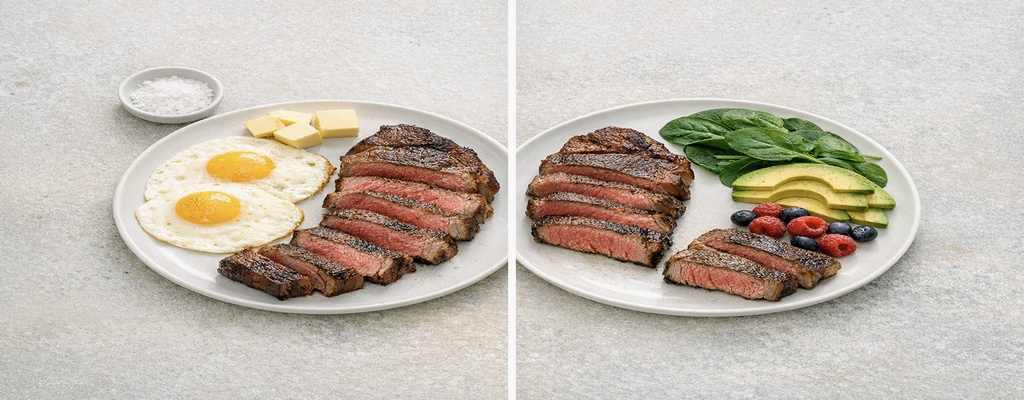
If you’ve spent any time in the low‑carb world, you’ve probably noticed something: people love to argue about Carnivore and Ketovore. One group says you should eat only meat. Another says you should eat mostly meat. Someone else insists you need a handful of berries “for antioxidants.” And then there’s the person who swears they feel amazing on Carnivore… except on weekends… unless it’s a holiday… or a birthday.
It’s no wonder people feel confused.
But here’s the truth most people never say out loud:
You don’t need someone else’s rules — you need a path that fits YOU.
Carnivore and Ketovore are not enemies. They’re not rivals. They’re not competing diets. They’re simply two different ways of eating that can serve you in different seasons of your life. And once you understand how each one works, choosing between them becomes surprisingly simple.
Let’s break it down — not with complicated charts or strict rules — but with real‑life clarity.

Carnivore: The “Just Eat Meat” Reset
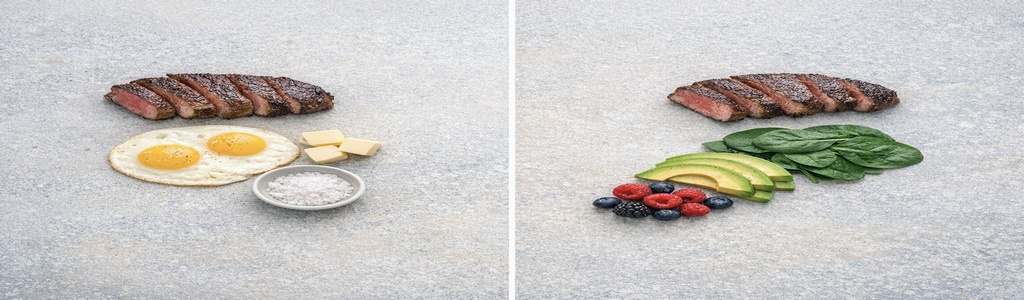
Carnivore is the simplest way of eating you’ll ever try. It’s meat, eggs, seafood, animal fats, salt, and water. That’s it. No tracking. No macros. No plants. No guessing. It’s the nutritional equivalent of clearing your desk, wiping the slate clean, and starting fresh.
People don’t choose Carnivore because it’s trendy. They choose it because it removes the noise. It takes away the cravings, the constant decision‑making, the “should I eat this?” mental chatter. It gives you a clean reset — physically and mentally.
But Carnivore isn’t just about food. It’s about clarity. It’s about learning what your body actually likes without the interference of carbs, sugar, or plant foods that may or may not agree with you.
Of course, Carnivore has its challenges. Social events can feel awkward. Eating out takes planning. And the mental shift of removing all plant foods can feel bigger than the physical shift. But for many people, the simplicity is worth it. It’s a season of focus — a season of learning — a season of getting back in control.
Ketovore: The “Mostly Meat” Lifestyle
If Carnivore is the clean slate, Ketovore is the comfortable middle ground. It’s still animal‑based, still low‑carb, still simple — but with a little more flexibility. You can include low‑carb vegetables, berries, avocado, seasonings, and the occasional keto‑friendly food without losing the structure that keeps you on track.
Ketovore feels easier for many people because it fits real life. You can go to a family dinner without feeling like an alien. You can enjoy a small side of vegetables without guilt. You can live in a way that feels sustainable long‑term.
But flexibility comes with responsibility. Ketovore requires honesty. It requires awareness. It requires you to know the difference between “a little flexibility” and “I’m sliding back into old habits.” When done well, Ketovore is a powerful, balanced lifestyle. When done carelessly, it becomes keto‑ish — and that’s where people get stuck.
So Which One Is Better?
That’s the wrong question — and it’s why so many people stay confused.
The real question is:
Which one fits your life, your personality, and your goals right now?
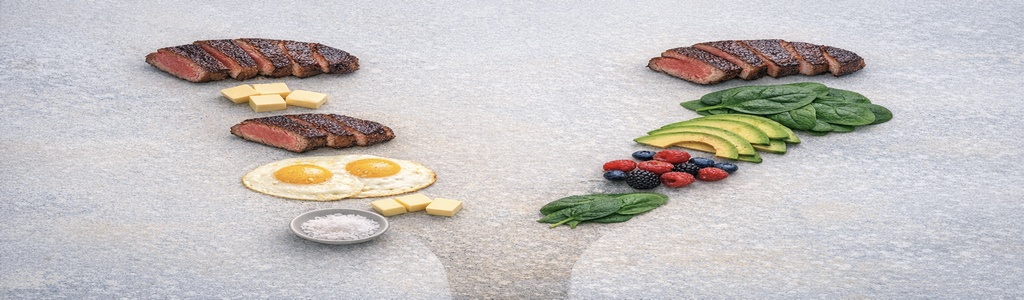
Carnivore is perfect if you want simplicity, structure, and a clean reset.
Ketovore is perfect if you want flexibility, variety, and long‑term balance.
Neither is superior. They’re simply different tools.
Think of it like this:
- Carnivore is the “declutter your entire house” moment.
- Ketovore is the “keep your house clean without going extreme” rhythm.
Both matter. Both help. Both work.
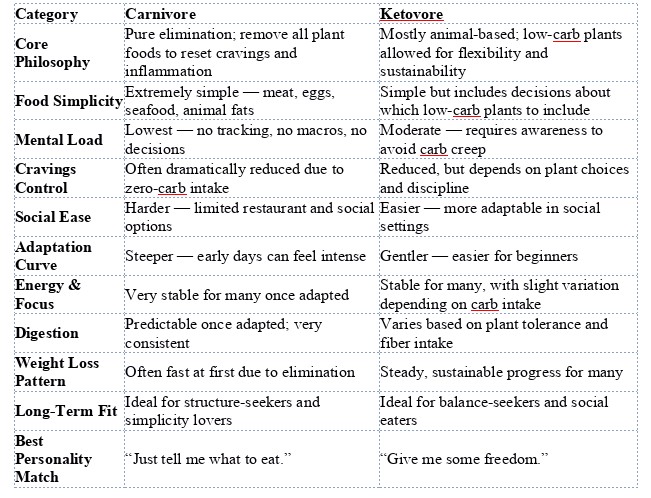
Carnivore vs Ketovore: A Real‑Life Comparison
How to Know Which One Fits You
Here’s the simplest way to decide:
If you’re overwhelmed, stressed, craving everything, or stuck in a cycle of starting and stopping — Carnivore gives you the reset you need.
If you’re stable, confident, and want a lifestyle you can live with long‑term — Ketovore gives you the flexibility you want.
And here’s the part most people never tell you:
You can switch between them anytime.
You’re not locked in. You’re not failing if you adjust. You’re simply learning what works for you — and that’s the whole point.

Real‑Life Examples
Take the Overthinker. They start Ketovore because it feels easier… but the constant decisions wear them down. They switch to Carnivore and suddenly feel free.
Then there’s the Social Eater. They start Carnivore and feel amazing — until they feel isolated. They shift to Ketovore and find a balance that lets them enjoy life without losing progress.
And the Beginner? They start Ketovore, build confidence, then transition to Carnivore when they’re ready for a deeper reset.
Different people. Different needs. Different seasons.
My Experience‑Based Recommendation
**NOTE** This is NOT medical advice. Always seek the guidance from your physician before beginning any type of exerciseprogram or a change in diet.
Start Ketovore if you want flexibility.
Start Carnivore if you want clarity.
Move between them as needed.
Use each one as a tool, not a prison.
You’re not choosing a diet.
You’re choosing a direction.
Carnivore is a way of eating (WOE)
Carnivore is NOT a diet perse, if you want to refer to it as a diet. It will be the elimination diet.
Final Takeaway
Carnivore and Ketovore aren’t about perfection. They’re about progress. They’re about learning your body. They’re about finding a way of eating that gives you energy, confidence, and control.
You don’t have to choose forever.
You just have to choose what works for you right now — and give yourself permission to grow.

10 Startling Misconceptions About the Carnivore Diet Debunked
10 Startling Misconceptions About the Carnivore Diet Debunked
The Carnivore Diet has gained popularity in recent years, attracting attention for its extreme approach of consuming only animal products. While some swear by its benefits, others raise concerns about its safety and nutritional adequacy. In this article, we’ll explore ten common misconceptions about the Carnivore Diet, providing clarity and insight into this controversial dietary choice.
### 1. “It’s Just a Protein-Packed Meat Fest”
Contrary to popular belief, the Carnivore Diet isn’t about gorging on protein. In fact,

it’s a high-fat, moderate-protein approach. Imagine sinking your teeth into a juicy, marbled steak – that’s the essence of this diet. Most calories come from animal fats, not protein. This fat-forward approach is crucial for maintaining energy levels and hormonal balance. So, while you might picture plate after plate of chicken breast, the reality is far more indulgent.
### 2. “You’ll Be Malnourished in No Time”
The idea that eliminating plants leads to nutrient deficiencies is pervasive. But here’s the kicker: animal products are nutritional powerhouses. Red meat, for instance, is packed with iron, zinc, and B vitamins. Organ meats? They’re nature’s multivitamins. Even the elusive vitamin C, often cited as a concern, is present in fresh meat, particularly organ meats like liver. While the long-term effects of plant exclusion are still under study, many carnivore dieters report feeling more vibrant than ever.
### 3. “Hello, Scurvy!”
The specter of scurvy looms large in discussions about the Carnivore Diet. It’s a reasonable concern – after all, we’ve been taught that vitamin C comes from fruits and vegetables. But here’s the plot twist: fresh meat contains small amounts of vitamin C, especially in organ meats like liver. Moreover, the body’s need for vitamin C decreases on a low-carb diet due to lower insulin levels and reduced oxidative stress. Fascinatingly, some carnivore dieters report no issues with vitamin C deficiency even after years on the diet.
### 4. “Your Heart Will Hate You”
The high saturated fat content of the Carnivore Diet often raises eyebrows and blood pressure concerns. But what if everything we thought we knew about saturated fat was wrong? Recent studies have begun to challenge the long-held belief that saturated fat is the villain in heart disease. For instance, a 2020 meta-analysis published in *The American Journal of Clinical Nutrition* found no significant association between saturated fat intake and cardiovascular disease risk.
Additionally, some researchers argue that inflammation—not saturated fat—might be the real culprit behind heart disease. This emerging perspective is prompting a reevaluation of dietary guidelines and encouraging individuals to consider their own metabolic responses to different types of fats.

### 5. “Prepare for Perpetual Constipation”
No fiber? Must mean no… movement, right? Not so fast. While it’s true that the Carnivore Diet is devoid of dietary fiber, many followers report that after an initial adjustment period, their digestive systems function smoothly. Some even claim improved digestion due to reduced gut irritation from plant fibers or anti-nutrients found in certain foods. The theory? The body adapts to efficiently process meat and fat, reducing the need for fiber.
### 6. “It’s Impossible to Stick to Long-Term”
The idea of eating only animal products for life seems daunting if not impossible. Yet there are individuals who have followed this diet for years, reporting sustained benefits. Dr. Shawn Baker, a prominent advocate who has been carnivore for over five years, exemplifies this commitment. While long-term studies are lacking, these anecdotal reports are intriguing and raise questions about our understanding of dietary sustainability.
### 7. “It’s Just Keto with Extra Steps”
While both the Carnivore and Keto diets are low-carb, high-fat approaches, they’re far from identical twins. The Carnivore Diet takes things to the extreme by eliminating all plant foods—no avocados, no nuts, no low-carb veggies—staples in many keto diets. The result? A potentially different metabolic state and unique challenges and benefits that warrant exploration.
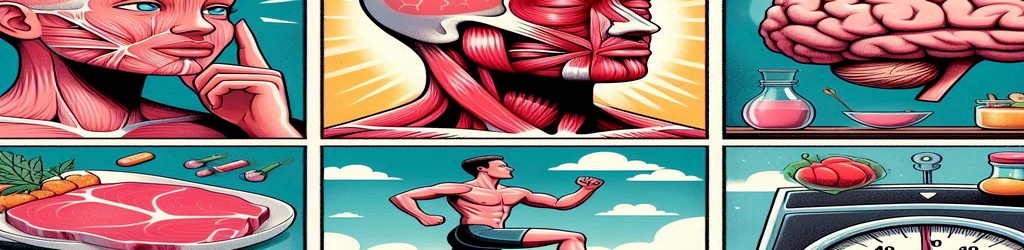
### 8. “It’s Just Another Weight Loss Fad”
Weight loss often occurs on the Carnivore Diet; however, viewing it solely as a weight loss strategy misses the bigger picture. Proponents report a range of benefits beyond weight loss: reduced inflammation, improved mental clarity, enhanced energy levels, and even alleviation of autoimmune symptoms like arthritis or psoriasis have been noted by some followers.
This broader perspective makes the diet intriguing for many looking for more than just a quick fix for weight loss; it may offer potential therapeutic tools for specific conditions.
### 9. “It’s an Environmental Disaster”
The environmental impact of a meat-only diet is a hot-button issue that cannot be ignored. Critics argue it’s unsustainable and harmful to the planet due to greenhouse gas emissions associated with livestock farming. However, supporters counter with discussions about regenerative agriculture practices that can mitigate these concerns.
For example, well-managed grazing can improve soil health by promoting biodiversity and sequestering carbon dioxide from the atmosphere—a process known as carbon farming. This complex issue invites us to reconsider our understanding of sustainable food systems and encourages dialogue around responsible meat consumption.
### 10. “Anyone Can Try It Safely”
While the Carnivore Diet has its enthusiasts, it’s not a one-size-fits-all solution. People with certain health conditions—such as kidney disease or specific genetic disorders—may need to avoid high-protein diets due to potential complications related to protein metabolism or kidney function.
Pregnant women and children should also approach such restrictive diets with caution due to their unique nutritional needs during growth and development phases. As with any significant dietary change, consulting with a healthcare professional is crucial before diving into this unconventional eating plan.

## Consider This
The Carnivore Diet challenges many long-held beliefs about nutrition and health while sparking curiosity about our dietary choices’ complexities and implications. While it remains controversial and requires more research to fully understand its long-term effects and benefits, exploring these misconceptions can provide valuable insights into this unconventional approach to eating.
Whether you’re considering trying it or simply curious about its claims, understanding these misconceptions can help you navigate the meaty debates surrounding this diet while empowering you to make informed decisions about your own health journey.