carnivore electrolytes
Still Tired on Carnivore? 7 Fixes That Actually Work for Anyone Tired on Carnivore Diet
September 23, 2026
Still Tired on Carnivore? 7 Fixes That Actually Work
Feeling tired on carnivore diet is one of the most common experiences people face in the early days of the carnivore journey. The diet has a reputation for delivering clean energy, mental clarity, and a sense of steady strength that many people haven’t felt in years. But if you’re feeling tired, sluggish, or strangely drained, you’re not alone — and you’re not doing anything wrong.
Why Fatigue Happens in the First Place
This early phase of feeling tired on carnivore diet is temporary and simply part of your body adjusting to a new fuel source. That tired feeling doesn’t mean carnivore isn’t working. It means it is. When you remove carbs, your body begins a recalibration process that touches everything from your hormones to your electrolytes to your sleep cycles. And while the long‑term benefits are real — steady energy, clearer thinking, reduced inflammation — the early days can feel like a tug‑of‑war between your old fuel system and your new one. The good news is that this phase doesn’t last, and even better, there are clear, practical steps you can take to move through it with confidence.This early phase of feeling tired on carnivore diet is temporary, and it’s simply your body adjusting to a new fuel source. This early phase of feeling tired on carnivore diet is temporary and part of normal adaptation. Low electrolytes are one of the biggest reasons people feel tired on carnivore diet.
For a simple breakdown of electrolytes, see this medical overview from Healthline!!
Why You Feel Tired on Carnivore Diet
Replace your FIRST paragraph in that section with these two paragraphs:
One of the biggest reasons people feel tired on carnivore diet is surprisingly simple: they’re not eating enough. When you cut carbs, your appetite signals change and many people unintentionally under‑fuel without realizing it.
Your body needs nourishment to adapt. When you don’t give it enough, fatigue shows up quickly.
If you’re unsure how much food your body actually needs during adaptation, my guide on carnivore portion sizing can help you fuel with confidence: How Much Can I Eat on Carnivore?.
But even when people eat enough, they often miss another crucial piece: fat. Fat is your new energy source, and without it, your body struggles to make the metabolic switch. If you’re choosing leaner cuts or avoiding butter because you’re used to low‑fat dieting, your energy will suffer. Fat isn’t the enemy here — it’s the fuel. Adding butter to your meals, choosing ribeye over sirloin, or including eggs more often can make a dramatic difference in how you feel. For more insight into why fat plays such a powerful role in your energy and metabolism, you can read about the hidden benefits of carnivore here: 5 Hidden Benefits of the Carnivore Diet.
Electrolytes play an even bigger role than most people expect. When you cut carbs, insulin drops, and when insulin drops, your kidneys release sodium. That sodium loss pulls potassium and magnesium with it, creating a cascade of symptoms that look and feel like fatigue, headaches, irritability, and even dizziness. Many beginners think they’re tired on carnivore diet because of the diet itself, when in reality they’re simply low on electrolytes. Adding salt to your meals, drinking salted water, and making sure you’re getting enough magnesium can restore your energy faster than almost anything else. Many beginners think they’re tired on carnivore diet because of the diet itself, when the real issue is low electrolytes.If you want a deeper breakdown of how electrolytes affect your energy on carnivore, you can explore my full guide on fixing fatigue the right way: Electrolytes on Carnivore.
There’s also the reality of carb withdrawal — something people don’t always expect. Carbs and sugar create dependency. They influence dopamine, cravings, and even emotional comfort. When you remove them, your body goes through a detox period that can feel like fogginess, sluggishness, or a general lack of spark. This isn’t a sign that carnivore is wrong for you. It’s a sign that your body is letting go of something it relied on for years. The withdrawal phase passes, and what comes after it is a cleaner, steadier kind of energy that doesn’t crash or spike.
Sleep is another piece of the puzzle. Carnivore often improves sleep long‑term, but early on, your sleep cycles may shift. Some people fall asleep faster but wake up earlier. Others feel restless for a few nights as their hormones rebalance. Because sleep and energy are deeply connected, any disruption in your sleep rhythm can show up as daytime fatigue. Keeping a consistent sleep schedule, avoiding late‑night eating, and giving your body time to adjust can help smooth this transition.
Salt deserves its own spotlight. Many people underestimate how much sodium they need on carnivore. Low sodium equals low energy — period. Salt isn’t just a seasoning; it’s a foundational electrolyte that supports nerve function, hydration, and muscle performance. If you’re feeling tired, adding more salt to your meals is one of the simplest and most effective fixes.
And then there’s the hormonal shift — the quiet, behind‑the‑scenes recalibration that happens when you remove carbs and processed foods. Hormones like insulin, cortisol, and leptin begin to stabilize. Inflammation drops. Blood sugar becomes more predictable. Your metabolism starts to run cleaner. But during this rebuilding phase, your energy may fluctuate. This isn’t a setback. It’s a sign that your body is healing.
As your hormones stabilize and your metabolism adapts, the feeling of being tired on carnivore diet fades and is replaced with steady, reliable energy.
The Energy Boost Is Coming
The encouraging part is that most people notice a clear energy lift between Week 2 and Week 4. The fog begins to fade. The heaviness lifts. Your body becomes more efficient at burning fat, and your brain begins to thrive on ketones. The energy you feel after adaptation isn’t jittery or artificial — it’s steady, calm, and reliable. It’s the kind of energy that carries you through your day without crashing.
If you’re tired right now, you’re not failing. You’re adapting. And adaptation takes time.
Carnivore isn’t about perfection. It’s about progress. It’s about learning how your body responds to real food, how your energy shifts when you fuel properly, and how your metabolism transforms when you give it the chance. The tiredness you feel today is temporary, and the fixes are simple: eat enough, prioritize fat, balance electrolytes, support your sleep, embrace the detox phase, salt your meals generously, and give your hormones time to settle.
Your energy is coming. And when it arrives, it will feel different — stronger, steadier, and more sustainable than anything you’ve felt on a carb‑heavy diet. Carnivore energy isn’t loud. It’s stable. It’s the kind of energy that lets you live your life without constantly thinking about food, cravings, or crashes.
You’re not doing anything wrong. You’re simply moving through the part of the journey that every successful carnivore has walked through. And once you’re on the other side, you’ll understand why this phase was worth it.
Consider This
If fatigue is part of your carnivore journey right now, what might it be teaching you? What habits are being reshaped? What signals is your body finally able to send now that carbs aren’t masking them? Perhaps the tiredness you feel isn’t a setback but an invitation — a chance to slow down, fuel more intentionally, and listen more closely to what your body needs. Maybe the real transformation isn’t just physical but mental: learning patience, trusting the process, and recognizing that healing often begins in the quiet, uncomfortable places. If your energy is rebuilding, what might your life look like when it returns stronger than before?
Carnivore and Digestion: What Actually Changes
Carnivore and Digestion: What Actually Changes
When most people switch to the carnivore diet, they expect changes in energy, cravings, or mental clarity. What they don’t expect — and often aren’t prepared for — is how dramatically digestion shifts. The truth is simple: when you remove fiber, fillers, and plant compounds, your digestive system begins operating in a completely different way. And for many, it’s the first time their gut has been able to work without interference.
Carnivore digestion isn’t a mystery. It’s a physiological reset — one that reveals how your gut was designed to function when inflammation drops, motility stabilizes, and nutrient absorption improves. But to understand what’s happening, you have to look at the gut the way a mechanic looks at an engine: not as a collection of symptoms, but as a system responding to a new fuel source.
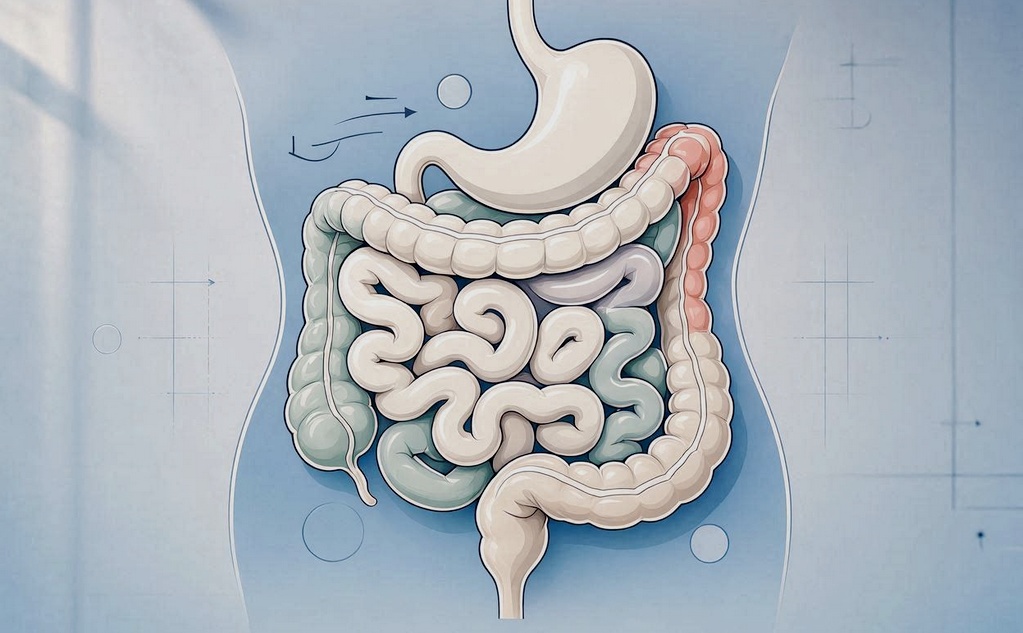
Your Gut Has Been Working Overtime
Most people don’t realize how much work their digestive system does on a standard diet. Fiber, grains, seed oils, and plant compounds require complex processing. They ferment, they irritate, they inflame, and they demand constant motility. When you remove them, the gut doesn’t “slow down” — it simply stops fighting.
Dr. Ken Berry has spoken about this repeatedly. In one of his Q&A livestreams, he said:
“When you stop eating fiber, your gut doesn’t get lazy — it gets efficient. You’re not constipated. You’re just not producing trash anymore.”
Dr. Ken Berry debunking dietary fiber Source: (youtube.com)
That single idea reframes the entire carnivore digestion experience. You’re not broken. You’re not backed up. You’re not malfunctioning. You’re adapting.

Why You Poop Less — And Why It’s Normal
One of the first surprises carnivore beginners experience is reduced stool volume. It can feel alarming at first, especially if you’ve spent years believing that “more fiber equals better digestion.” But carnivore flips that equation.
Meat digests almost completely. There’s very little residue. Your body absorbs more nutrients and leaves less waste. The result? Smaller stools, less frequent bowel movements, and a calmer digestive rhythm.
Steak & Butter Gal (Bella) has addressed this many times in her community coaching calls:
“When people tell me they’re worried because they’re pooping less, I tell them: that’s the point. You’re absorbing your food now. You’re not pushing out fillers.”
Dr. Ken Berry has a video entitled “What Carnivore Did To My Poop”. Watch It Here!
This isn’t constipation. Constipation is painful, bloated, strained, and uncomfortable. Carnivore adaptation is none of those things. It’s simply efficient.
The Gut Bacteria Shift No One Talks About
Fiber‑fermenting bacteria thrive on plant foods. When you remove those foods, those bacteria naturally decline — and protein‑ and fat‑digesting species take over. This isn’t “killing your microbiome.” It’s reshaping it.
The carnivore community often describes this shift as a “calming” of the gut. Less fermentation means less gas. Less irritation means less bloating. Less residue means less stool volume. It’s not a reduction in gut health — it’s a reduction in gut chaos.
Dr. Anthony Chaffee explains it this way:
“Your gut bacteria change because you’re no longer feeding the ones that thrive on fiber. That’s not bad. That’s normal. You’re feeding the bacteria that digest the food you’re actually eating.” Read His Article Here This shift is one of the biggest reasons digestion feels smoother on carnivore. Your gut isn’t fighting anymore. It’s cooperating.
Inflammation Drops — And Motility Stabilizes
Plant foods contain compounds that irritate the gut lining: lectins, oxalates, phytates, and more. Even “healthy” foods like spinach, almonds, and whole grains can trigger inflammation in sensitive individuals. When inflammation drops, motility becomes more predictable.
This is why many people report:
- Less urgency
- Less cramping
- Less bloating
- Less gas
- Less discomfort after meals
Your gut isn’t being pushed, pulled, and inflamed by foods it was never designed to process in large quantities.
Carnivore doesn’t slow digestion. It normalizes it.
Electrolytes: The Hidden Key to Smooth Digestion
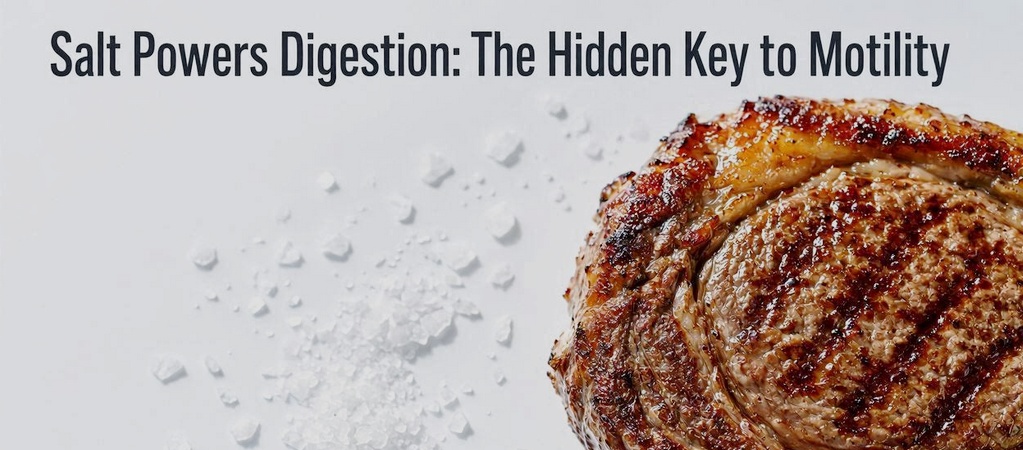
Electrolytes play a direct role in gut motility. Sodium, potassium, and magnesium help the muscles of the digestive tract contract smoothly. When electrolytes fall behind — especially during the first few weeks — digestion can feel sluggish.
This is why carnivore veterans emphasize salt so heavily. It’s not just about hydration. It’s about digestion.
Dr. Berry often says:
You need Salt in your diet. Source: (YouTube)
When electrolytes are balanced, digestion becomes effortless.
What Digestion Feels Like After Adaptation
Once your gut adjusts, carnivore digestion becomes surprisingly simple. Meals feel satisfying without heaviness. Bloating becomes rare. Gas becomes minimal. Bathroom trips become predictable. And for many, digestive discomfort becomes a thing of the past.
People often describe the experience as “quiet digestion.” No rumbling. No churning. No bloated pressure. Just calm.
Carnivore doesn’t just change digestion — it reveals what digestion feels like when the gut isn’t inflamed, irritated, or overloaded.

Your Gut Isn’t Broken — It’s Healing
The biggest misunderstanding about carnivore digestion is the belief that changes equal problems. In reality, the changes are signs of healing.
Your gut is doing less work because it doesn’t need to do more. Your stool volume is smaller because your food is more nutrient‑dense. Your motility is calmer because inflammation has dropped. Your bacteria have shifted because your diet has shifted. Your digestion feels different because your gut is finally operating the way it was designed to.
Carnivore digestion isn’t a warning sign. It’s a reset.
Consider This
Your digestive system has been talking to you for years — through bloating, gas, discomfort, urgency, and inflammation. Carnivore doesn’t silence those signals. It resolves them.
When you remove the foods that irritate your gut and replace them with the foods your body is built to digest, your gut doesn’t struggle. It thrives.
Carnivore digestion isn’t strange. It isn’t dangerous. It isn’t a problem to fix.
It’s a glimpse into how your gut works when it’s finally given the chance to heal.